
Brachiaria xantholeuca
Brachiaria xantholeuca
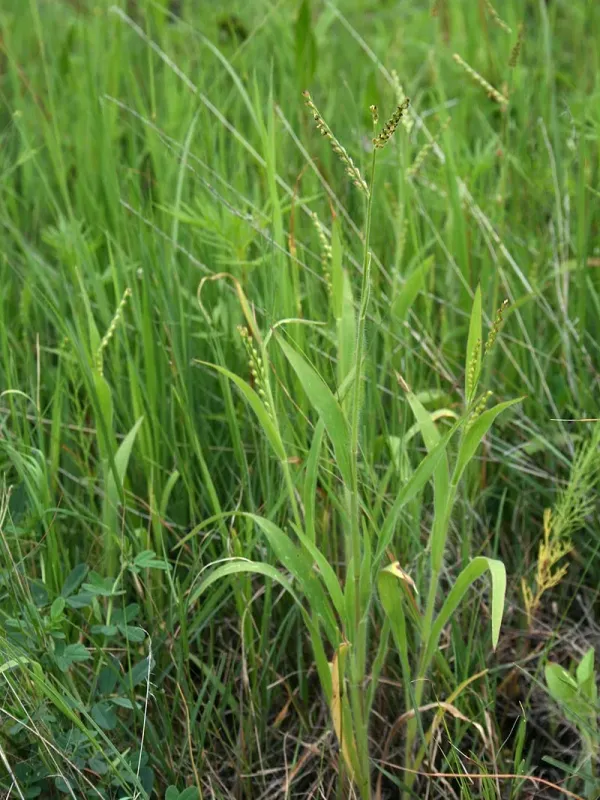
Description
Sowing dates
Brachiaria xantholeuca is a robust perennial grass species belonging to the Poaceae family. This crop is valued in tropical agriculture for its ability to provide high-quality forage for livestock production.
Sowing should be performed at the start of the rainy season to ensure sufficient moisture for seedling establishment. Seeds should be sown at a shallow depth of 1–2 cm to maximize germination rates in warm soils.
The establishment phase requires a well-prepared seedbed that is free from aggressive weeds. Uniform seed distribution is critical to creating a dense and healthy pasture or hay field from the outset.
Rolling the soil after seeding is recommended to improve seed-to-soil contact, which accelerates root development. This practice is particularly beneficial in light-textured or dry soil conditions.
Germination is rapid under favorable temperatures (above 20°C). Proper management during the first few weeks is essential to ensure the young plants can compete effectively with native vegetation.
Growing requirements
This grass thrives in full sunlight and shows a remarkable ability to adapt to varying soil fertility levels. It performs well on marginal, acidic, and low-nutrient soils, making it an excellent choice for pasture improvement.
Brachiaria xantholeuca prefers well-drained conditions. While it is moderately drought-tolerant, waterlogging for extended periods can severely impact its growth and vitality, potentially causing root diseases.
The optimal pH range for this species is 5.5 to 7.0. While the plant can tolerate low-fertility soils, nitrogen applications significantly boost biomass production, leading to higher forage yields for farmers.
As a tropical grass, it requires warm climates and is sensitive to frost. It grows best in regions where temperatures remain consistently high throughout the year, allowing for continuous vegetation cycles.
Its deep and extensive root system contributes to soil structure stability, effectively preventing erosion on sloped terrains and improving overall soil health in integrated farming systems.
Yield
The primary use of Brachiaria xantholeuca is for cattle grazing and hay production. It is highly palatable and provides a dense canopy that recovers quickly after grazing or mechanical harvesting.
Yield potential is dependent on management intensity, including the frequency of cuts and nutrient supplementation. Multiple harvests are possible per season under irrigation or favorable rainfall patterns.
Grazing management should focus on maintaining a residual height of 10–15 cm to support rapid regrowth. This practice ensures that the plants store enough carbohydrates in their bases for recovery.
The forage quality remains high throughout the growing season, provided that the crop is harvested before the stems become overly lignified. Timely cutting ensures higher protein digestibility for livestock.
Productive pasture stands can last for many years if managed correctly, providing a reliable and sustainable source of biomass for livestock farming operations globally.
Main diseases and pests
Fungal pathogens represent the most significant threat, particularly in humid conditions with limited airflow. Maintaining an appropriate stocking density helps prevent the buildup of fungal infections within the grass.
Pests such as grasshoppers and various stem-boring insects may damage the crop. Integrated pest management, focusing on early detection and biological control, is the preferred strategy for maintaining plant health.
Poorly drained soils often lead to root rot, which is a major factor in pasture degradation. Ensuring proper drainage is the most effective way to protect the crop against water-induced decline.
Overgrazing can weaken the grass, making it more susceptible to environmental stressors and invasive weed encroachment. Proper pasture rotation is essential to keep the stand vigorous and resistant to threats.
Regular monitoring of the field is crucial for early diagnosis of nutrient deficiencies or stress. Swift intervention can prevent small patches of damage from spreading across the entire cultivated area.