
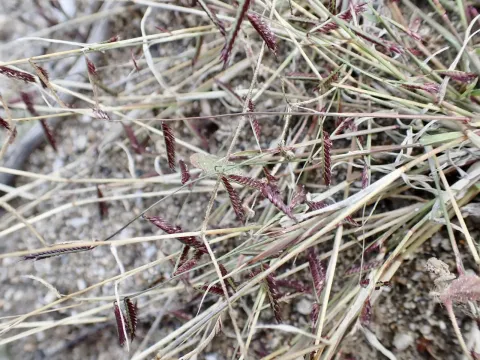
Bouteloua barbata
Bouteloua barbata
Bouteloua barbata, commonly known as six-weeks grama, is an annual grass belonging to the Poaceae family. This species is highly regarded for its ability to thrive in extremely arid environments where rainfall is scarce and unpredictable.
What the section contains
Bouteloua barbata
The plant is native to the southwestern United States and Mexico, where it has evolved to complete its life cycle rapidly during short periods of moisture. This biological adaptation allows it to flourish in habitats characterized by harsh, high-temperature conditions.
Soil requirements for this crop include well-drained, sandy, or gravelly substrates. Bouteloua barbata does not tolerate waterlogging, as the root system requires significant aeration to remain healthy and avoid common fungal infections in wet soil.
Climatic requirements are centered on full sun exposure and warm temperatures. The species is highly sensitive to frost, which limits its growing season to the warm months of the year, usually following the onset of summer rains in its native range.
Agronomic management involves selecting sites with minimal competition from perennial shrubs. Due to its status as an annual, providing sufficient space and light is essential for the plant to reach its full vegetative potential during the limited growing window.
The primary economic use of Bouteloua barbata is as a source of forage for livestock in arid regions. Its palatability and nutritional content make it a preferred species for grazing animals, providing essential nutrients during lean times.
Though biomass production is relatively low compared to irrigated grasses, its resilience makes it an indispensable component of rangeland management. It often provides the primary source of green forage when other grasses have already gone dormant.
Grazing management should focus on maintaining a healthy seed bank. Since the plant reproduces primarily through seed dispersal, allowing a portion of the crop to mature at the end of the season ensures continued productivity for subsequent years.
In addition to livestock grazing, this grass is used for soil stabilization. Its root system helps bind loose, sandy soils, significantly reducing the impact of wind erosion on vulnerable desert landscapes or degraded rangelands.
Yield stability depends heavily on moisture availability. To optimize returns, producers should monitor weather patterns closely, as the plant's growth rate is directly proportional to the amount of effective precipitation received during its active growth stage.