
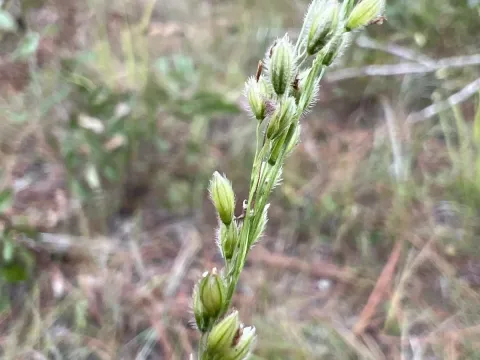
Anthenantia
Anthenantia
Anthenantia is a genus of perennial grasses belonging to the Poaceae family. In their natural environment, reproduction primarily occurs through seeds that mature in late summer or early autumn.
What the section contains

Anthenantia
In agronomic practice, deliberate sowing of this genus is rare, as it is not a primary commercial crop. For restoration or ecological purposes, sowing is best performed in the autumn, ensuring seed-to-soil contact in warm, moist conditions to facilitate natural stratification.
The seeds require well-drained but consistently moist soil to germinate successfully. Shallow sowing is the preferred method because the small seeds are sensitive to deep burial, which can inhibit emergence.
Active growth occurs during the spring and summer months when temperatures are optimal. The plant exhibits the ability to spread vegetatively, forming stable and persistent sod structures over time.
When planning propagation, light requirements must be considered. Anthenantia generally prefers full sun to partial shade, which is a critical factor for establishing healthy stands in managed or restored landscapes.
This genus is primarily distributed in the southeastern United States and parts of Mexico, reflecting its adaptation to warm, subtropical climates with significant annual precipitation levels.
Soil preferences include sandy, loamy-sand, or peaty substrates, commonly found in pine flatwoods, prairies, and open savannas. The plants show moderate tolerance to varying soil acidity levels.
Consistent moisture is essential for development. While the plants thrive in moist environments, they do not tolerate prolonged waterlogging and perform best in areas with efficient sub-surface drainage.
The species is fire-adapted and naturally occurs in habitats maintained by periodic low-intensity wildfires. These disturbances help remove competing vegetation and recycle nutrients into the soil.
Anthenantia does not compete well with vigorous forage species in heavily fertilized agricultural systems. Its niche is strictly defined by low-nutrient, open ecosystems where it can maintain a stable population.
In the wild, these grasses can be affected by various foliar fungal pathogens. Rust fungi are the most common concern, as they can weaken the vegetative mass if conditions remain consistently humid.
Herbivorous insects, such as lepidopteran larvae and various grasshoppers, may cause localized damage to the foliage. However, widespread outbreaks that threaten entire populations are not typically recorded.
Overgrazing by livestock is a primary anthropogenic threat. Since Anthenantia is not a high-output forage grass, intensive grazing pressure quickly depletes the plant's energy reserves and leads to stand decline.
Alterations to the hydrological regime, often caused by land drainage and infrastructure development, represent a significant risk. The species is highly sensitive to the desiccation of the topsoil.
Competition from invasive plant species is a major limiting factor in disturbed areas. Managing the spread of tall, encroaching weeds is essential to protect the long-term viability of Anthenantia populations.