
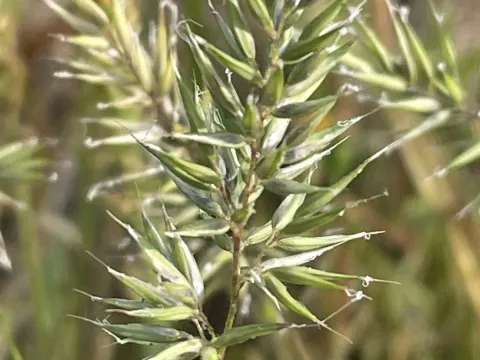
Annual vernal grass
Anthoxanthum aristatum
Annual vernal grass (Anthoxanthum aristatum) is an annual grass species belonging to the Poaceae family. It is distinct for its fragrant, sweet-scented foliage caused by the presence of coumarin, which is released upon drying.
What the section contains
Annual vernal grass
The species is native to Europe and the Mediterranean basin, having adapted to a wide range of temperate habitats. It thrives in open, sunny environments and is particularly well-suited to sandy, acidic, or nutrient-poor soils where other competitive species might struggle.
Regarding climate requirements, the plant shows significant plasticity. It handles short periods of moisture deficit well and is capable of rapid development in the early spring, taking advantage of cool, humid conditions before the summer heat.
Agrotechnical management should focus on maintaining optimal soil structure. The plant prefers light, well-aerated substrates. While it does not require intensive fertilization, moderate management helps maximize the biomass production for forage needs.
Cultivation success depends on proper site selection. Farmers often use this grass in mixtures for extensive meadows to improve the palatability of hay for livestock. It is known for its ability to stabilize the soil surface effectively.
In agricultural practice, the primary use of Anthoxanthum aristatum is as a high-quality forage grass. Its aromatic properties make it a desirable addition to hay, significantly improving the voluntary intake of fodder by ruminants.
Harvesting is typically performed during the peak flowering stage to ensure the highest nutrient content. Proper drying techniques are essential to preserve the coumarin-based fragrance and the nutritional integrity of the plant biomass.
When utilized for pasture, the grass requires careful management of grazing pressure. Rotational grazing cycles are recommended to allow for vegetative regrowth, which prolongs the productive life of the stand throughout the growing season.
The species also contributes to biodiversity in meadow ecosystems. Its presence supports soil health and serves as a natural stabilizer, preventing erosion on marginal agricultural lands that are prone to environmental stress.
Future trends in forage production suggest that including aromatic species like annual vernal grass can optimize feeding efficiency. By balancing protein and fiber, farmers can produce a more appealing and balanced diet for their livestock.