
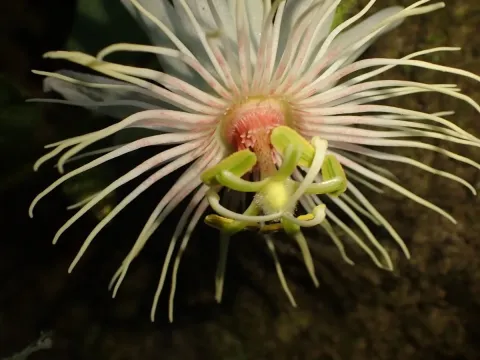
Passiflora vellozoi
Passiflora vellozoi
The propagation of Passiflora vellozoi is commonly achieved through seeds or stem cuttings, depending on the specific agricultural goals of the grower.
What the section contains
Passiflora vellozoi
Seeds require scarification to soften the hard outer seed coat, which significantly improves the uniformity of germination in a greenhouse environment.
Optimal sowing occurs during the early spring months, ensuring that the seedlings have enough time to establish a robust root system before the peak summer heat.
For cuttings, semi-hardwood segments are selected, treated with a rooting hormone, and placed in a mist chamber to maintain high ambient humidity.
Transplanting into the permanent growing area should only proceed once the risk of frost has completely passed and soil temperatures have stabilized.
Passiflora vellozoi is a perennial climbing vine belonging to the Passifloraceae family, native to the tropical and subtropical regions of South America.
The plant thrives in full sun exposure, which is necessary for maximizing photosynthetic activity and promoting the development of high-quality fruit.
Soil quality is paramount for this species; it requires a well-drained, fertile substrate with a slightly acidic pH between 5.5 and 6.5 for optimal nutrient uptake.
Adequate water supply is essential during the active growing season, although the plants must be shielded from waterlogging, which causes root damage.
Regular pruning and the provision of a sturdy trellis system are necessary to manage the vigorous growth habit of this climbing plant throughout the year.
Spider mites are the most common pest affecting Passiflora vellozoi, particularly in dry environments where natural humidity levels are low.
Fungal diseases, specifically root rot pathogens, represent a significant threat to plants grown in heavy soils with poor aeration or drainage capacity.
Integrated pest management strategies, including the use of beneficial insects, are recommended to maintain plant health without heavy reliance on chemicals.
Effective ventilation within the planting area is the best defense against powdery mildew and other airborne fungal diseases that attack the foliage.
Periodic monitoring for signs of stress, such as yellowing leaves or wilting, allows for early intervention and effective application of targeted fungicides.