
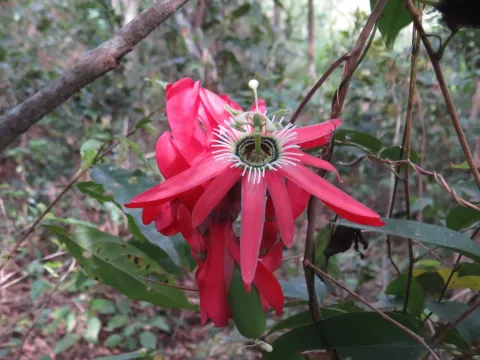
Red passion flower
Passiflora racemosa
Passiflora racemosa, commonly known as the red passion flower, belongs to the Passifloraceae family. Native to the rainforests of Brazil, this evergreen climbing vine is widely recognized for its distinctive pendulous racemes of striking red flowers, which make it a valuable ornamental crop.
What the section contains
Red passion flower
The culture thrives in tropical and subtropical climates where temperatures remain consistently above 18°C. In commercial production, it is typically grown in greenhouses or botanical conservatory environments, as it lacks hardiness against frost and cold winds.
For optimal development, the soil must be rich in organic matter and possess excellent drainage properties. A growing medium comprising peat, perlite, and decomposed bark provides the necessary aeration for root health while maintaining sufficient moisture levels.
Watering requirements are substantial during the growth season, necessitating a moist substrate. However, preventing water stagnation is vital, as excessive soil moisture frequently leads to root oxygen starvation and subsequent decline of the plant specimen.
Proper trellis training is an essential aspect of the crop's agrotechnics. Regular pruning of unproductive stems encourages the development of new flowering branches, ensuring better light penetration and increased floral density throughout the production cycle.
The red passion flower is susceptible to several common pests, most notably spider mites and whiteflies, which thrive in dry indoor climates. Integrated pest management strategies, including biological control or targeted soap sprays, are recommended for maintaining plant health.
Fungal diseases, including root rot and grey mold, are the primary botanical threats associated with improper humidity management. Ensuring adequate air circulation and applying fungicides only when environmental controls are insufficient are critical steps in professional crop management.