
Pedilanthus
Pedilanthus
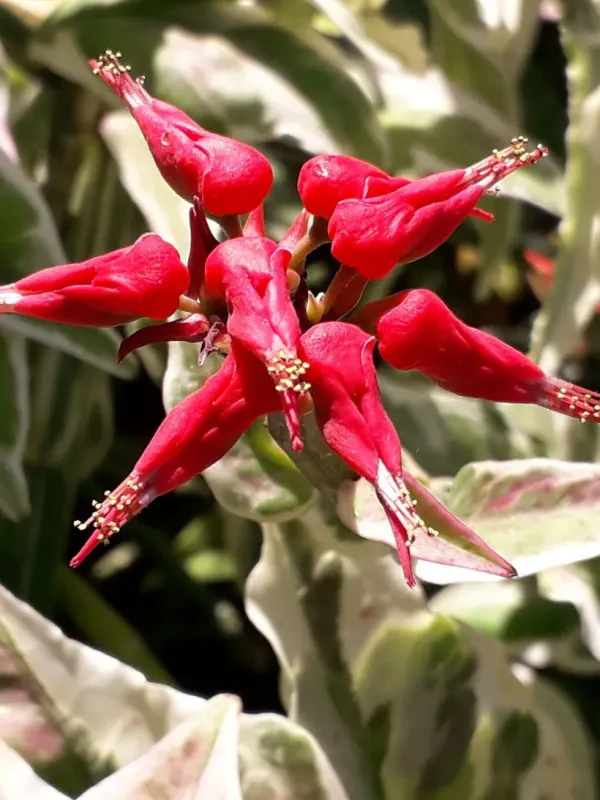
Description
Growing requirements
Pedilanthus (Pedilanthus) is a perennial evergreen succulent plant belonging to the Euphorbiaceae family. Its natural habitat includes the tropical and subtropical regions of North and South America, where it thrives in warm climates.
The plant requires bright, indirect light to maintain its growth and vibrant leaf coloration. Direct sun exposure should be minimized to avoid scorching the stems. Optimal temperatures range from +20°C to +25°C during the growing season, with cooler conditions in winter.
Proper soil composition is vital for Pedilanthus. It prefers a well-draining, loose mixture containing organic loam, leaf mold, and coarse sand. Good drainage at the bottom of the container is necessary to prevent stagnant moisture and root rot.
Watering practices must be strictly controlled; the soil surface should dry out significantly between waterings. Overwatering is the most common mistake, often leading to rapid root decay, especially when temperatures are lower during the winter period.
The main agricultural and horticultural use of this plant is for ornamental decoration in greenhouses and interior landscaping. It is highly valued for its unique zig-zag stem structure and its drought-tolerant properties compared to non-succulent species.
Main diseases and pests
Pedilanthus is susceptible to common greenhouse pests such as spider mites and mealybugs. These infestations are particularly prevalent in low-humidity environments, requiring regular inspection and humidity management to prevent population growth.
Fungal infections, including root rot and leaf spot, are the primary biological threats caused by poor drainage or excessive soil moisture. Treatment involves adjusting the irrigation schedule and applying appropriate systemic fungicides to restore plant health.