
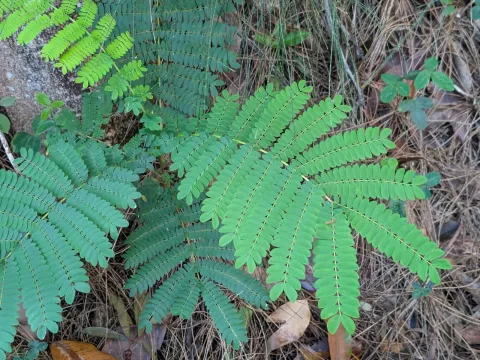
Paraserianthes falcataria
Paraserianthes falcataria
Propagation of Paraserianthes falcataria is primarily achieved through seeds. Due to their hard, impermeable seed coat, mechanical or hot water scarification is essential to ensure uniform and rapid germination.
What the section contains
Paraserianthes falcataria
Seeds are sown in nursery containers using a well-draining potting medium. Consistent moisture is required during the initial stages to facilitate successful sprouting within a week or two.
Seedlings are transplanted to their permanent site when they reach a height of approximately 30 to 50 cm. This operation is best performed at the onset of the rainy season to minimize plant stress.
Planting density depends on the specific objective, such as timber production or shade for crops. Standard spacing typically ranges from 3x3 meters to 4x4 meters to promote straight trunk development.
Maintenance during the establishment phase is critical. Regular weeding around the base of the young tree prevents competition for water and nutrients, which is vital for the tree's rapid juvenile growth phase.
As a member of the Fabaceae family, Paraserianthes falcataria is well-adapted to humid tropical climates. It flourishes in areas with high annual rainfall and constant temperatures.
The species prefers deep, fertile, and well-drained soils. However, thanks to its ability to fix atmospheric nitrogen via root nodules, it can tolerate poor soil conditions where other species might fail.
Optimal growth occurs at temperatures between 22°C and 30°C. The tree is strictly tropical and cannot withstand frost or cold snaps, which limits its commercial cultivation to specific geographic latitudes.
Sunlight is a major requirement. The species is highly light-demanding, and significant canopy shading will severely inhibit its growth rate and lead to poor timber quality.
Wind sensitivity is a major concern. The wood is relatively brittle, and the root system is shallow, making the tree prone to windfall in areas exposed to severe weather or strong gusts.
Paraserianthes falcataria is renowned for being one of the fastest-growing trees in the world. Annual height increments can reach up to 5 meters during the initial growth years.
Commercial harvesting cycles are short, typically ranging from 8 to 12 years. By this age, the trees reach a harvestable diameter suitable for plywood and light construction timber.
The species is highly valued in agroforestry systems. It provides excellent mulch due to high leaf turnover, which enriches the soil with nitrogen for companion crops grown beneath its canopy.
Wood volume production per hectare is exceptionally high, making it a preferred choice for short-rotation forestry in Southeast Asia and parts of the Pacific region.
Seed production is prolific, starting as early as 3 to 4 years of age. This ensures a steady supply of genetic material for large-scale reforestation or plantation expansion.
The most significant biological threat is gall rust, caused by the fungus Uromycladium falcatarium. This disease can cause severe gall formation on leaves, branches, and seeds, ultimately leading to tree decline.
Management of the disease involves using resistant genetic clones and ensuring adequate thinning of plantations to improve air circulation and reduce humidity within the stand.
Various insect pests, including stem borers and defoliators, pose a risk to the stands. Regular monitoring is necessary to detect outbreaks early and prevent widespread damage.
Root rot diseases are common in waterlogged areas. Proper site selection and drainage management are essential to prevent fungal proliferation in the root zone.
Strict phytosanitary practices during the movement of seedlings are vital to prevent the unintentional spread of pathogens into clean plantation areas.
Harvesting is typically conducted as clear-felling or selective thinning. Due to the rapid growth, timing is crucial to avoid wood decay and to ensure optimal product quality.
The timber is soft, lightweight, and easy to machine, which makes it ideal for producing veneer, plywood, light furniture, and packaging materials.
Harvesting requires careful planning to prevent damage to neighboring trees and the surrounding environment, especially in areas with unstable soils.
Post-harvest management is important; the logs must be processed quickly to prevent fungal attack and discoloration caused by high sapwood moisture content.
Utilization of biomass waste, such as branches and leaves, as organic fertilizer helps maintain soil structure and fertility for the next planting cycle.