
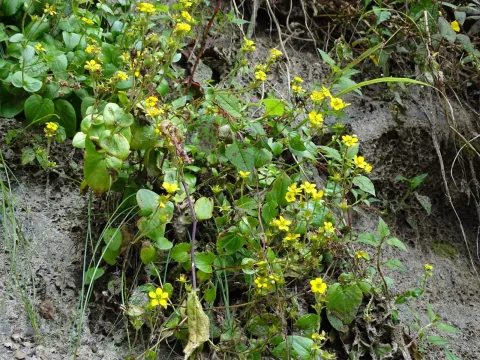
Parnassia-leaved saxifrage
Saxifraga parnassifolia
The Parnassia-leaved saxifrage (Saxifraga parnassifolia) is a distinctive perennial belonging to the Saxifragaceae family. This species originates from high-altitude mountainous regions, specifically adapted to the harsh environment of screes and rocky crevices.
What the section contains
Parnassia-leaved saxifrage
In cultivation, this plant requires excellent drainage to survive, as it is extremely sensitive to waterlogged conditions. A substrate consisting of mineral grit, limestone chips, and a small amount of organic matter is ideal for replicating its natural habitat.
Regarding climate, the plant thrives in areas with significant diurnal temperature variation. It prefers full sun exposure to maintain its compact growth form and prevent etiolation, which often weakens the plant structure.
Agronomic practices for this species are minimal; it is not a heavy feeder and can suffer from excessive fertilization. Over-nutrition typically results in soft, succulent growth that is more prone to environmental stress and fungal attacks.
Botanically, Saxifraga parnassifolia is characterized by its basal rosettes of leaves and distinct flower morphology. Propagation is usually achieved through careful division or seed sowing, although seed viability in cultivation can vary significantly.
The primary threat to the Parnassia-leaved saxifrage is fungal rot, specifically affecting the crown and root system. This is almost always triggered by poor air circulation or excessive moisture retained in the soil mix.
Slugs and snails are the most common pests that pose a severe threat, especially to young or delicate rosettes. Maintaining a layer of sharp grit around the base of the plant can serve as an effective physical deterrent.
Spider mites may become an issue during periods of prolonged hot and dry weather, particularly if the plant is grown in a greenhouse or restricted alpine house environment. Monitoring for fine webbing is essential.
Powdery mildew can occur if plants are overcrowded or if humidity levels fluctuate too rapidly. Providing sufficient spacing and ensuring the foliage stays dry during irrigation significantly reduces the risk of infection.
While rare in outdoor rock gardens, soil-borne larvae can occasionally damage roots. Using high-quality, sterile potting media in container-grown specimens helps to minimize the risk of pest infestation from the soil.