
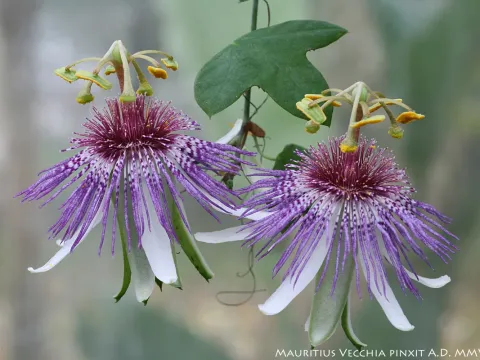
Passiflora watsoniana
Passiflora watsoniana
Passiflora watsoniana is a stunning species within the Passifloraceae family, native to high-altitude regions of South America, known for its unique and intricate floral structure.
What the section contains
Passiflora watsoniana
To cultivate this species successfully, it is essential to provide a well-draining soil mix rich in organic matter, as the plant is highly sensitive to waterlogged conditions.
The plant thrives in bright, indirect light conditions, requiring at least several hours of high-intensity exposure to initiate healthy blooming cycles in a greenhouse environment.
Consistent ambient humidity levels between 60% and 75% are necessary for the development of healthy, glossy foliage and to prevent leaf edge browning.
A dormant phase during winter is recommended, where temperatures should be held around 15°C to allow the plant to recuperate before the next growing season.
Spider mites represent a major challenge for Passiflora watsoniana, especially in indoor environments where air circulation is restricted and humidity is low.
Root rot is a common pathological threat resulting from overwatering or inadequate soil aeration, which leads to sudden foliage wilting and plant death.
Aphids often colonize the tender tips of new growth, requiring careful monitoring and swift application of organic or chemical pesticides to prevent significant damage.
Fungal leaf spot diseases can affect the plant if moisture remains on the foliage for extended periods, necessitating the use of specialized fungicides during outbreaks.
To maintain plant health, it is vital to keep the growing area clean, remove decaying leaves promptly, and ensure proper spacing between plants to mitigate infection risks.