
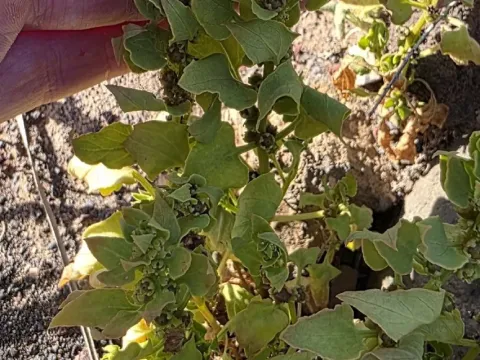
Patellifolia patellaris
Patellifolia patellaris
Patellifolia patellaris is a significant member of the Amaranthaceae family, known for its remarkable tolerance to harsh environments. As a wild relative of the cultivated beet, it serves as a critical reservoir of genetic traits for improving commercial sugar beet varieties.
What the section contains
Patellifolia patellaris
The plant is native to the Mediterranean basin and the Canary Islands, where it thrives in coastal habitats. Its evolutionary history has endowed it with physiological mechanisms to survive in saline conditions, classifying it as a true halophyte.
For successful agricultural production, the crop requires well-drained, sandy, or stony soil types. It is highly intolerant of waterlogging, which can cause significant stress to its root system and facilitate the development of various soil-borne pathogens.
Climate requirements include high solar radiation and a semi-arid environment. The plant exhibits superior drought resistance, allowing it to maintain metabolic processes in conditions that would be lethal to most conventional agricultural crops.
The management of this crop involves precision irrigation, where water quality must be balanced with soil salinity levels to ensure optimal growth and minimize the risk of osmotic stress that hinders development in non-adapted plants.
The primary threats to Patellifolia patellaris are pathogens associated with moisture-rich environments. Root rot and fungal infections pose the most significant risk, particularly when soil structure does not allow for efficient drainage.
Nematode infestation remains a critical challenge for long-term cultivation. These soil-dwelling pests can cause severe damage to the root apparatus, leading to stunted growth and reduced vigor, especially in plots where crop rotation is not practiced.
Leaf-feeding insects represent a secondary threat, as they can compromise the photosynthetic capacity of the plant. Monitoring of foliage is essential to detect early infestations before they reach the economic injury level.
Weed control is vital during the establishment phase, as the plant is slow to cover the soil initially. Implementing mechanical weed management or organic mulching is recommended to reduce competition for nutrients and moisture.
Integrated pest management strategies focusing on soil health are the most effective way to prevent outbreaks. Maintaining a balanced ecosystem within the plot prevents the rapid spread of diseases that might otherwise devastate the crop yield.