
Pavetta caffra
Pavetta caffra
Pavetta caffra is a dense, evergreen shrub or small tree belonging to the Rubiaceae family. Native to the coastal regions of South Africa, it thrives in varied habitats ranging from thickets to the edges of coastal forests.
What the section contains
Pavetta caffra
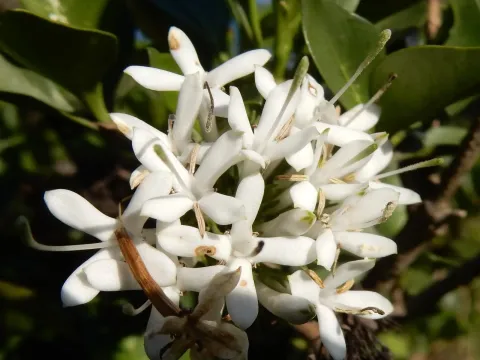
The plant is botanically recognized by its glossy, dark green, leathery leaves and terminal clusters of fragrant, snow-white flowers. A unique biological feature is the presence of specialized leaf nodules that host symbiotic bacteria.
Climate requirements for this species include warm, frost-free conditions. It performs best in environments that mimic its natural habitat, requiring plenty of indirect sunlight and high humidity to maintain its vibrant appearance.
Soil management for Pavetta caffra necessitates well-draining, nutrient-rich media. It is highly intolerant of waterlogged soil, so incorporating organic matter and sand into the planting hole is recommended to ensure optimal root aeration and development.
In landscape design, this plant is valued for its versatility as a hedging shrub or a focal point in tropical gardens. It is appreciated by horticulturists for its resilience and the aesthetic quality of its seasonal floral displays.
Common pests include scale insects and mealybugs, which may colonize the undersides of the leaves and stems. Regular monitoring and the application of horticultural soaps are generally effective strategies for managing these infestations.
Pathogenic threats primarily involve root rot and leaf spot diseases caused by poor drainage or high ambient humidity. Maintaining proper spacing and air circulation between individual plants is the best defense against these fungal issues.