
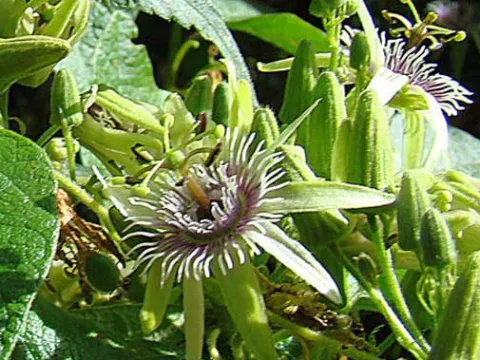
Passiflora sexiflora
Passiflora sexiflora
Propagation of Passiflora sexiflora in agricultural settings is typically achieved through seeds or cuttings. Sowing should be carried out in early spring to take advantage of the lengthening daylight hours, which are crucial for vigorous plant development.
What the section contains
Passiflora sexiflora
Seeds require specific preparation, such as warm water soaking or stratification, to overcome dormancy and improve germination rates. A stable substrate temperature of approximately 25 degrees Celsius is recommended to ensure uniform seedling emergence.
Vegetative propagation using semi-hardwood cuttings is a preferred method to ensure genetic consistency. These cuttings should be rooted in a high-humidity environment with bottom heat to facilitate rapid root system development.
Transplanting seedlings to the field or greenhouse must occur only after all risks of frost have passed. As this species is sensitive to temperature fluctuations, providing a gradual transition from nursery conditions to the outdoor environment is highly beneficial.
Planting density depends on the chosen training system. For intensive greenhouse production, vines are usually spaced at least 1.5 meters apart to allow for proper airflow and effective management of the rapidly growing canopy.
Passiflora sexiflora is a member of the Passifloraceae family, originating from tropical regions of the Americas. It thrives in well-lit locations but requires partial shading during peak sunlight hours to prevent foliage scorch.
The plant has a high demand for humidity, necessitating regular irrigation in dry climates. Ensuring efficient soil drainage is critical, as the roots are highly susceptible to rot when subjected to prolonged waterlogging.
An ideal substrate should be loose, nutrient-rich, and maintained at a slightly acidic to neutral pH. Regular application of potassium-rich fertilizers is recommended to support continuous flowering and fruit development throughout the season.
Optimal growth temperatures range between 20 and 28 degrees Celsius. Prolonged exposure to temperatures below 10 degrees Celsius can significantly inhibit metabolic activity and result in stunted growth or even plant death.
As a vigorous vine, this crop requires sturdy support structures. In commercial operations, industrial-grade trellises are used to manage the long, climbing stems and improve the overall efficiency of harvest and pest management.
The primary agricultural use of Passiflora sexiflora is fruit production for both fresh market and processing industries. While the fruits may be smaller than other commercial species, their unique aromatic properties make them highly valued.
Yield stability is heavily dependent on successful pollination. Since the flower morphology is specialized, greenhouse operations often benefit from assisted pollination techniques to maximize fruit set and overall crop output.
The harvest period is typically extended, requiring multiple picking rounds as individual fruits reach maturity. Productivity is highest on second-year shoots, making strategic pruning an essential practice for maintaining long-term yield levels.
Harvesting should be performed when the fruit reaches its peak color and firmness. Early morning harvesting is advised to maintain fruit turgidity and ensure better post-harvest shelf life and market appearance.
In addition to fruit production, the species possesses significant aesthetic value, making it a viable crop for agritourism ventures where the visual appeal of the vines can generate supplemental revenue.
Passiflora sexiflora is susceptible to fungal diseases such as root rot and powdery mildew, particularly in environments with stagnant air. Maintaining proper spacing and air circulation is the most effective cultural control method.
Common pests include spider mites and whiteflies, which thrive in dry, warm greenhouse conditions. Regular monitoring and the application of integrated pest management strategies are necessary to prevent population outbreaks.
Aphids often target young, tender shoot tips, potentially vectoring viruses and deforming leaves. Early detection is crucial, and the use of targeted biological control agents is preferred to protect pollinator safety.
Root-knot nematodes can cause significant damage by restricting nutrient uptake. Symptoms include leaf chlorosis and general lack of vigor; infested plants should be removed immediately to prevent spread through the soil.
Biosecurity measures, such as disinfecting pruning tools and quarantining new plant material, are essential for preventing the introduction of incurable viral diseases that could jeopardize the entire crop.
Harvesting begins when the fruit shows characteristic color development. It is vital to avoid over-ripening, as this significantly reduces shelf life and negatively affects the delicate flavor profile required for premium-grade produce.
Fruits should be harvested by carefully clipping the peduncle rather than pulling, which prevents mechanical damage to the rind. Any bruising or tearing can significantly accelerate post-harvest decay.
After picking, the harvest must be sorted according to size and maturity. Storage should occur in cool, well-ventilated conditions, away from direct sunlight, to maintain the product's quality for as long as possible.
Transportation requires shallow, ventilated containers to prevent crushing the delicate fruit under its own weight. Careful handling is required to ensure that the produce arrives at the market in optimal condition.
Post-harvest management also includes clearing away debris from the vine to prevent the accumulation of pathogens, thereby preparing the plant for a successful dormant period and the next production cycle.