
Pardancanda
Pardancanda
Pardancanda seeds are typically sown in March or April in seed trays filled with a light, nutrient-rich substrate to ensure uniform germination.
What the section contains
Pardancanda
The seeds should be covered with no more than 0.5–1 centimeter of soil, and it is recommended to cover the trays with glass or film to create a greenhouse effect.
Seedlings usually emerge within 2–3 weeks, after which the covering should be removed to provide the plants with sufficient diffused light.
Transplanting into the open ground is carried out in late May, once the risk of night frost has passed, maintaining a spacing of 20–30 centimeters between plants.
For faster propagation, rhizome division can be performed, which is best done in early spring or at the end of the summer season after flowering ends.
Pardancanda, a bigeneric hybrid between Iris and Belamcanda, prefers well-lit areas protected from strong gusts of wind.
The culture requires moderately moist, fertile soil with a neutral or slightly acidic pH, along with an essential drainage layer to prevent waterlogging.
During dry periods, the plant needs regular irrigation at the base, while it is important to avoid getting water on the flowers to prevent damage.
To maintain decorative appeal and abundant flowering throughout the season, apply complex mineral fertilizers every 3–4 weeks.
In regions with harsh winters, Pardancanda requires mandatory protection with spruce branches or dry leaves, as the plant is sensitive to severe frost.
The primary danger for Pardancanda consists of fungal diseases, such as root rot, which occurs when the soil is overly saturated with water.
Pests, such as the iris fly or thrips, can attack buds and leaves, leading to deformation and a decrease in the plant's aesthetic value.
Disease prevention involves the timely removal of plant debris and maintaining crop rotation within the garden bed.
When signs of pest infestation are detected, specialized insecticides must be used in strict accordance with the application instructions.
Regular soil cultivation helps with root aeration and reduces the risk of pathogenic microorganisms developing in the plant's root zone.
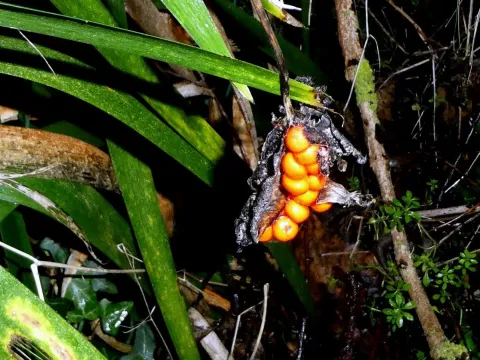
The collection of Pardancanda seeds is carried out after the capsules have fully matured, when they begin to dry out and darken in color.
The seeds are carefully extracted and dried in a ventilated area for further storage or spring planting.
To preserve specific variety traits, it is recommended to collect seeds only from the healthiest and most profusely flowering specimens in the garden.
It is important not to delay the harvest, as ripe capsules may burst, leading to the loss of planting material.
After seed collection, the aerial part of the plant is gradually pruned, preparing the crop for its dormant period and subsequent wintering.