
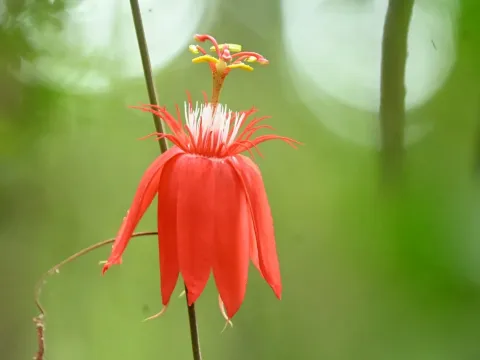
Passiflora vitifolia
Passiflora vitifolia
Passiflora vitifolia, known as the grape-leaved passion fruit, is a vigorous woody vine belonging to the Passifloraceae family. It is typically propagated via seeds or vegetative cuttings in professional nursery environments to ensure high success rates.
What the section contains
Passiflora vitifolia
Seeds should be sown in a well-draining, peat-based sterile medium. Providing a constant warm temperature of 25–28°C is crucial for uniform germination, which may take several weeks under stable greenhouse conditions.
Vegetative propagation is achieved using semi-hardwood cuttings taken during the active growth phase. Applying rooting hormones and maintaining high humidity through intermittent misting systems significantly improves the survival rate of young starts.
Transplanting into the permanent location, whether in a high-tunnel greenhouse or open tropical field, must be done carefully to avoid root disturbance. The plant requires space to establish its root system before rapid above-ground growth begins.
As a climbing vine, Passiflora vitifolia requires robust support structures such as trellis systems or mesh netting. Proper training of the lead shoots early in the season is vital for structural integrity and future harvest accessibility.
Originating from the tropical landscapes of Central and South America, this species thrives in warm, humid climates. It requires consistent temperatures between 20°C and 30°C and is intolerant of frost or sudden cold snaps.
The ideal soil profile is a loose, organic-rich loam with a slightly acidic to neutral pH (6.0–7.0). Excellent drainage is non-negotiable, as waterlogging is the primary cause of root disease and plant decline.
Exposure to bright, filtered sunlight is optimal for sustained growth. While the plant can tolerate some direct sun, high-intensity midday heat in arid regions necessitates light shade cloths to prevent leaf scorching and desiccation.
Water requirements are significant; the soil must remain consistently moist but never waterlogged. In containerized or indoor settings, maintaining ambient humidity levels above 70% is necessary to encourage healthy flowering and growth.
Nutrient management involves balanced NPK fertilizers with increased phosphorus levels during the pre-flowering stage. Micronutrients should be provided periodically to ensure vibrant foliage and optimal fruit development.
The harvest consists of oblong, bright red fruits that are botanically fascinating and culinarily valuable. While primarily grown as an ornamental in many regions, the fruit is edible and prized for its unique flavor profile.
Productivity is highly dependent on effective pollination and the age of the vine. Mature vines, when properly managed and pruned, can provide a steady yield throughout the extended tropical growing season.
Commercial potential lies in both the fresh fruit market and the ornamental industry. The vivid, red, showy flowers are highly sought after for landscape architecture in tropical and subtropical urban environments.
The nutritional profile of the fruit includes high concentrations of vitamins and antioxidants, making it a healthy addition to food product lines. Efficient harvesting cycles are key to maximizing the quantity of premium-quality fruit.
Annual pruning is the most critical agronomic practice for yield maintenance. By removing old or unproductive wood, the plant redirects energy into new, fruit-bearing growth, ensuring long-term crop vitality.
Common pests such as spider mites and whiteflies frequently colonize the undersides of leaves, particularly in low-humidity environments. Integrated pest management, including systemic insecticides and biological controls, is essential.
Root rot pathogens are a persistent threat in poorly drained soils. To mitigate this risk, growers must utilize high-quality substrates and implement stringent watering protocols to ensure the root zone remains oxygenated.
Aphids can cause significant damage to young shoots, leading to stunted growth and flower drop. Regular scouting and immediate intervention with insecticidal soaps or specific horticultural oils are recommended for effective control.
Fungal issues, including powdery mildew, often occur when air circulation is inadequate. Maintaining proper plant spacing and thinning the canopy improve airflow, significantly reducing the incidence of foliar fungal pathogens.
Virus transmission via sap-sucking insects remains a potential hazard. Maintaining strict weed control around the growing area is a preventative measure to reduce the reservoir of host plants for insect vectors.
Harvesting is performed manually once the fruits reach full physiological maturity and develop their characteristic brilliant red color. Care must be taken to snip the peduncle cleanly to avoid damaging the plant’s stem tissues.
Immature fruits will not ripen effectively post-harvest. Therefore, selective picking is required, focusing on the fruit that has reached the appropriate softness and color maturity for the target market.
Post-harvest handling must prioritize cooling and careful packaging. The fruit is perishable and should be kept in a ventilated, cool area or refrigerated to extend shelf life before distribution to retail channels.
For large-scale operations, fruits are sorted by size and maturity level. Avoiding physical impact during transport is essential to prevent internal bruising and subsequent spoilage of the sensitive pericarp.
Value-added processing into juices, purees, or preserves is an excellent way to manage surplus harvest. This diversifies the product portfolio and minimizes post-harvest losses during the peak production window.