
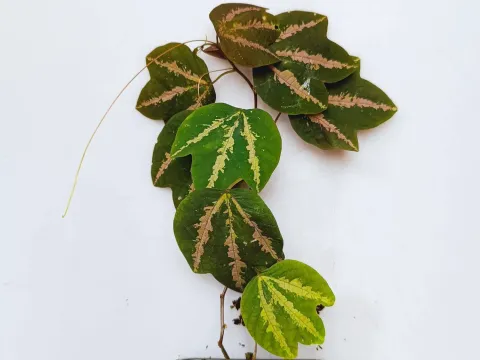
Three-banded passion flower
Passiflora trifasciata
Passiflora trifasciata, known as the three-banded passion flower, is a member of the Passifloraceae family. Native to the tropical rainforests of Peru and Ecuador, this species is highly valued for its striking, variegated foliage rather than its flowers.
What the section contains
Three-banded passion flower
The botanical highlight of this plant is its leaves, which feature three distinct light-colored or purple-tinted bands running along the leaf veins. It is a vigorous climber that thrives when provided with a suitable trellis or support structure.
In terms of climate, it requires warm, tropical conditions. The ideal temperature range is between 20°C and 25°C. It is intolerant of frost and must be grown in controlled indoor or greenhouse environments in cooler regions.
Lighting should be bright but indirect. Exposure to harsh, direct sunlight can fade the distinctive markings on the leaves and cause physiological stress. Partial shade is often preferred during the hottest hours of the day.
The soil must be well-draining, nutrient-rich, and slightly acidic. A mix of peat moss, perlite, and high-quality potting soil works best to ensure the roots remain healthy and aerated while retaining sufficient moisture.
The most significant pest for Passiflora trifasciata is the spider mite, which flourishes in dry indoor conditions. These mites feed on leaf juices, causing yellowing and webbing across the foliage.
Mealybugs and aphids may also attack the growing tips of the vine. Careful monitoring of the leaf axils and the undersides of the leaves is necessary to detect infestations before they spread significantly.
Root rot is a common issue caused by overwatering or poor drainage. Once the roots begin to decay, the plant may lose vigor and collapse quickly, making proper watering intervals essential.
Fungal leaf spot diseases can occur if the foliage remains wet for extended periods in environments with poor air circulation. Improving ventilation and reducing overhead watering can significantly lower this risk.
Preventive maintenance includes keeping the plant clean from dust, using systemic insecticidal soaps when pests are detected, and ensuring that the pot size is proportional to the root system to prevent waterlogging.