
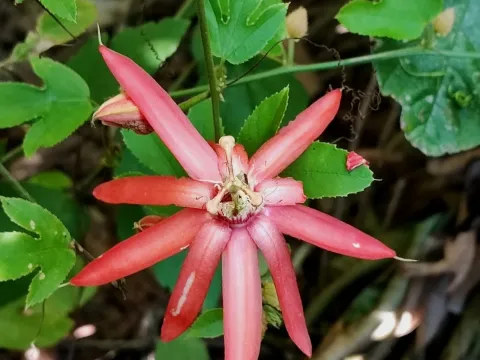
Passiflora quadriglandulosa
Passiflora quadriglandulosa
Propagation of Passiflora quadriglandulosa is typically achieved through seeds or stem cuttings. Seed propagation requires careful scarification to break dormancy and ensure consistent germination rates.
What the section contains
Passiflora quadriglandulosa
Sowing in controlled greenhouse environments should occur in late winter. Maintaining a constant temperature of 22–26 degrees Celsius is essential for optimal seedling development and vigor.
Stem cuttings are taken from healthy, semi-hardwood shoots during the active growing season. These cuttings are placed in a sterile, humid growing medium until roots are well-established.
Seedlings should be moved to individual pots once the first true leaves have developed. Careful handling of the root ball is necessary to minimize transplant shock and encourage rapid growth.
Transplanting to the final site is only recommended when all risks of frost have passed and soil temperatures have stabilized at warm levels suitable for tropical plants.
Passiflora quadriglandulosa belongs to the Passifloraceae family and originates from the tropical rainforests of South America. It thrives in environments with high levels of indirect sunlight.
The soil must be well-draining, fertile, and slightly acidic. Incorporating organic matter, such as compost or peat, helps to retain moisture while ensuring adequate aeration for the roots.
High relative humidity is crucial for the health of this species. In arid climates or indoor settings, supplemental misting or humidification systems are required to mimic its natural habitat.
As a vigorous climbing vine, the plant requires sturdy trellises or netting to support its growth. Regular pruning is necessary to manage the vine and direct energy towards flower production.
Nutrient management involves balanced liquid fertilizers during the spring and summer months. Phosphorus and potassium levels should be increased to support robust blooming and fruit development.
Spider mites represent a significant pest in greenhouse settings, particularly when humidity levels drop too low. Frequent inspection and proper ventilation are key to preventing large-scale infestations.
Whiteflies can cause damage by feeding on plant sap, leading to stunted growth and the transmission of secondary viral infections. Integrated pest management strategies are recommended for control.
Root rot is a common fungal issue resulting from poor drainage or overwatering. Using a porous potting mix and allowing the surface to dry slightly between waterings is effective prevention.
Foliar spot diseases may develop in conditions of poor air circulation and excessive moisture on leaves. Ensuring good spacing between plants helps to reduce the risk of pathogen spread.
Regular sanitation, including the removal of dead leaves and debris, is essential to minimize the habitat for potential pests and soil-borne diseases within the cultivation area.