
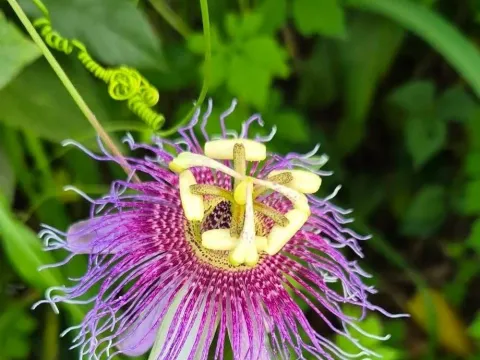
Passiflora serratifolia
Passiflora serratifolia
Passiflora serratifolia is a perennial, evergreen vine belonging to the Passifloraceae family. It is recognized for its unique serrated leaf margins and complex, colorful flowers that are characteristic of the passion flower genus.
What the section contains
Passiflora serratifolia
The species originates from the tropical zones of Central and South America, particularly thriving in Mexico and the surrounding regions. It requires a humid, warm environment and is typically found in edges of tropical forests where light availability is optimal.
Climatic requirements are strict: the plant flourishes in temperatures ranging from 20°C to 28°C and cannot withstand frost. High humidity levels are essential for healthy leaf development and flowering, making greenhouse cultivation the standard approach.
The soil should be rich, porous, and provide excellent drainage. A substrate consisting of peat, perlite, and organic compost is usually preferred to ensure root aeration and to prevent the risk of waterlogging, which the plant does not tolerate.
Cultivation practices involve the use of strong support structures or trellises, as the vine uses tendrils to climb rapidly. Pruning is vital to maintain the plant's shape and to encourage the production of fruiting stems during the growing season.
The primary pests affecting this culture include the two-spotted spider mite and aphids, which often colonize the underside of leaves. Regular monitoring and use of insecticidal soaps are recommended for control.
Root rot, primarily caused by Pythium and Phytophthora fungi, is a severe threat, especially in soils with poor drainage. Implementing a rigorous irrigation schedule is the best preventative strategy for growers.
Fungal leaf spots can develop when foliage remains damp for extended periods in environments with low airflow. Proper spacing between plants is critical to ensure enough ventilation and reduce disease pressure.
Virus infections, often spread by sucking insects, can cause stunted growth and deformed fruits. Removing and destroying affected plant material immediately is necessary to prevent an outbreak within the greenhouse.
Nematodes in the soil can compromise the root system, leading to overall plant decline. Sterile soil practices and crop rotation are standard agronomic procedures to mitigate these underground threats.