
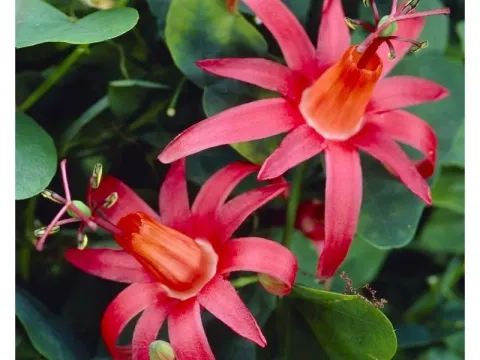
Passiflora murucuja
Passiflora murucuja
The propagation of Passiflora murucuja is primarily carried out through seeds or cuttings. Seeds require scarification before sowing, as they possess a hard seed coat that hinders rapid germination.
What the section contains
Passiflora murucuja
The optimal time for sowing in protected conditions or greenhouses is early spring when the photoperiod begins to increase. The temperature regime for successful germination should be maintained between 24 and 28 degrees Celsius.
Cuttings allow for the preservation of the parent plant's varietal characteristics, which is crucial for commercial production. Cuttings are harvested during the active growing season and rooted in a light substrate with high humidity.
Transplanting seedlings into the open ground is performed only after the threat of late frosts has passed. The plant is extremely sensitive to low temperatures, so moving it outdoors too early can result in the destruction of the root system.
To ensure a successful start, it is recommended to use prepared soil mixtures enriched with organic fertilizers. Watering after planting should be moderate but regular until the vine is fully established.
Passiflora murucuja belongs to the Passifloraceae family and is a heat-loving evergreen vine. For full development, the crop requires a long growing season with ample sunlight.
The soil used for cultivation must have excellent drainage capacity. Waterlogging in the root zone is fatal for this species, so loamy or sandy loam soils with a neutral to slightly acidic pH are preferred.
Air humidity plays a critical role: in conditions of excessive dryness, buds may drop before opening. In intensive farming, overhead irrigation or misting systems are often employed.
The crop requires reliable support structures, as the shoots can reach significant lengths in a short period. Regular formative pruning promotes better branching and the setting of fruit buds.
Plants should be fertilized with complex mineral fertilizers high in potassium during the active flowering phase. Nitrogen fertilization is restricted to prevent excessive vegetative growth at the expense of fruit production.
The primary pests of Passiflora include spider mites and whiteflies, which propagate actively under high-temperature conditions and poor air circulation.
Thrips are capable of causing significant damage to tender leaves and young shoots, deforming them and acting as vectors for viral diseases. Regular plant inspections allow for the timely detection of insect colonies.
Fungal diseases, such as root rot and late blight, develop primarily when watering regimes are violated. Prevention consists of adhering to agronomic standards and disinfecting the soil before planting.
Anthracnose can affect fruits and leaves during periods of high humidity, manifesting as dark spots. At the first signs of infection, removal of damaged parts and treatment with biofungicides is necessary.
To combat pests and diseases, it is recommended to use integrated protection systems, alternating products to prevent pathogen resistance.