
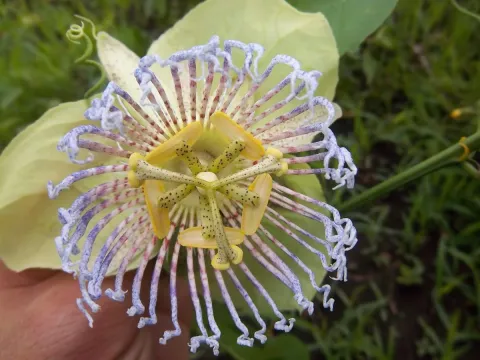
Passiflora platyloba
Passiflora platyloba
Propagation of Passiflora platyloba is best achieved through seeds or stem cuttings taken from healthy, mature mother plants during the growing season.
What the section contains
Passiflora platyloba
Seeds should be scarified and soaked in warm water for 24 hours before planting to break dormancy and ensure a higher rate of germination success.
Use a well-draining seed-starting mix and maintain constant temperatures between 25 and 30 degrees Celsius for the most reliable seedling emergence.
Once seedlings have reached a height of 10-15 centimeters, they should be transplanted into larger containers or permanent beds in the garden.
Ensure that the soil moisture is maintained consistently without becoming waterlogged, as young roots are particularly sensitive to anaerobic conditions.
Passiflora platyloba belongs to the Passifloraceae family and is native to tropical Central and South American climates, requiring heat to thrive.
The plant performs best in locations that provide plenty of bright, indirect sunlight, as excessive heat can dehydrate the broad leaves quickly.
Ideal soil should be rich in organic matter, slightly acidic to neutral, and possess excellent drainage capabilities to support vigorous vine growth.
Regular fertilization with a balanced NPK fertilizer during the peak growing season will help maintain the plant's health and support flowering.
Trellising is essential for this species, as it produces strong tendrils that need vertical support to display foliage and fruit effectively.
The primary pests affecting this crop include spider mites, aphids, and whiteflies, which can be managed with periodic applications of organic soap sprays.
Root rot caused by Phytophthora species is a major threat in soils that are too dense or poorly drained, especially during periods of high rainfall.
Leaf spot diseases may occur if humidity is too high and air circulation is insufficient, necessitating regular pruning of the interior vine canopy.
Regular monitoring of the underside of leaves is recommended to detect any early signs of pest infestation or fungal colonization before they spread.
Implementing integrated pest management practices significantly reduces the reliance on harsh chemicals, protecting both the fruit and the environment.
The fruit of Passiflora platyloba is valued for its unique taste and aromatic profile, making it a desirable crop for specialty markets and juice production.
Harvesting should be timed to when the fruit reaches its characteristic mature color and displays a slightly soft texture, indicating peak sweetness.
Handle the harvested fruits with extreme care, as the thin outer skin is susceptible to bruising, which limits the shelf life of the final harvest.
Post-harvest storage should occur in a cool, well-ventilated area to slow down the ripening process and maintain fruit quality for several days.
Proper harvest techniques involve cutting the fruit stems with sharp shears rather than pulling them off, which prevents damage to the delicate vine.