
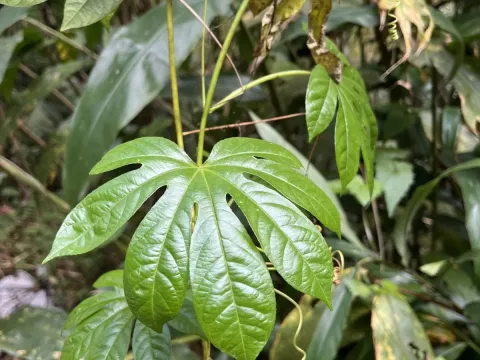
Passiflora serratodigitata
Passiflora serratodigitata
Propagation of Passiflora serratodigitata is typically performed via seeds or stem cuttings. Seeds require scarification to break dormancy and ensure uniform germination.
What the section contains
Passiflora serratodigitata
The optimal time for sowing in a greenhouse or indoor setting is late winter or early spring. This allows the plant to establish a robust root system before the peak growth phase.
Seeds should be sown at a depth of 1–1.5 cm in a well-draining, nutrient-rich soil mix. Consistent moisture is critical during the initial germination stage.
Maintaining a soil temperature of 22–25 degrees Celsius is essential for success. Germination usually occurs within three to four weeks under stable environmental conditions.
Once seedlings develop true leaves, they should be transplanted into individual pots. Providing a support structure early on is necessary as the vine grows rapidly.
Passiflora serratodigitata belongs to the Passifloraceae family and is native to the tropical regions of South America. It thrives in bright, indirect sunlight.
The vine requires consistent moisture levels. While it enjoys high humidity, waterlogged soil must be avoided to prevent root diseases and stunted development.
A neutral to slightly acidic soil, rich in organic matter, is preferred. The growing medium must have excellent drainage to support healthy root respiration.
This species is highly sensitive to frost. It requires a stable tropical climate, ideally ranging between 18 and 28 degrees Celsius throughout the year.
Fertilization is key during the growing season. A balanced fertilizer high in phosphorus and potassium promotes vigorous vegetative growth and blooming.
Common pests include spider mites, aphids, and mealybugs. These organisms can weaken the plant by feeding on the sap of young shoots and foliage.
Inadequate ventilation or excessive humidity often leads to fungal infections such as root rot or powdery mildew, which can be detrimental to the vine.
Integrated Pest Management (IPM) practices are recommended for control. This includes regular inspections and the use of insecticidal soaps when infestations appear.
Maintaining proper hygiene by removing dead plant matter reduces the risk of pathogens. Good airflow within the vine's canopy is crucial for disease prevention.
If chemical pesticides are used, ensure they are compatible with fruiting plants, particularly if the crop is intended for consumption.