
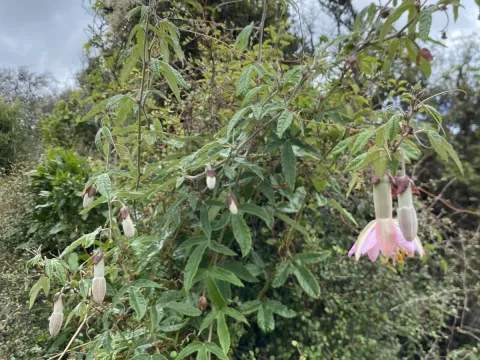
Passiflora pinnatistipula
Passiflora pinnatistipula
Passiflora pinnatistipula is a perennial woody vine belonging to the Passifloraceae family, originating from the Andean regions. Unlike tropical passion fruit varieties, this species is highly adapted to cooler, high-altitude climates, making it a unique agricultural subject.
What the section contains
Passiflora pinnatistipula
The plant thrives in regions with mild temperatures and requires well-drained, fertile soil with a neutral to slightly acidic pH. It performs best in areas that experience cool nights, which are essential for its vigorous vegetative development and flower initiation.
Agricultural success depends on providing robust trellis systems or structures for the vine to climb. Consistent pruning is necessary to maintain productivity, as fruit primarily develops on the new growth of the current season.
Water requirements should be managed to ensure adequate moisture without causing waterlogging, which is a major risk factor for root rot. The use of mulch around the base of the plant helps to maintain soil moisture levels and suppress weed growth.
This species is notable for its distinctively lobed stipules, contributing to its botanical uniqueness. Beyond fruit production, it serves as a stunning ornamental plant due to its complex and attractive flower structure.
The harvest cycle occurs when the fruits reach full maturity, indicated by the outer shell transitioning to a yellow or orange hue. Careful handling is required to prevent mechanical damage to the thin skin of the fruit during collection.
Fruits are highly valued for their aromatic pulp, which is rich in vitamins and minerals. The crop is primarily processed into juices, purees, and specialized food products, offering a distinct flavor profile suitable for gourmet applications.
The primary threats include fungal diseases such as powdery mildew, which thrive in high-humidity conditions. Ensuring proper spacing and air circulation within the canopy is the most effective cultural practice to mitigate these risks.
Pests like spider mites and aphids can become problematic, particularly in controlled greenhouse environments. Growers should employ regular scouting and integrated pest management strategies to keep populations under control without damaging the fruit quality.