
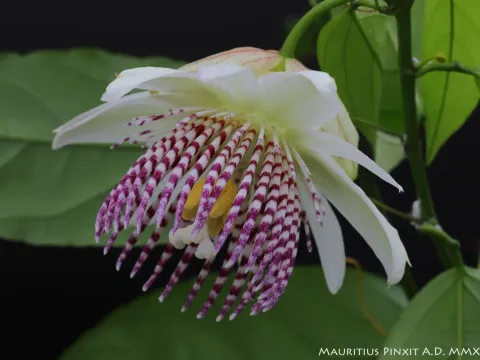
Passiflora riparia
Passiflora riparia
Passiflora riparia belongs to the Passifloraceae family. It is a perennial woody vine native to the tropical rainforests of South America, typically found along riverbanks in Brazil and Peru.
What the section contains
Passiflora riparia
For successful germination, seeds require scarification and 24-hour soaking in warm water. They are sown in loose, organic-rich substrate, maintaining temperatures of 25-28 degrees Celsius.
In commercial operations, propagation is supplemented by vegetative cuttings. Green cuttings are rooted in high-humidity greenhouses to preserve specific cultivar traits and accelerate fruit production.
Seedlings should be transplanted to their permanent outdoor or greenhouse location once the soil is sufficiently warm and frost risk has passed. The plant requires robust support structures for vertical growth.
When selecting a site, it is crucial to ensure protection from midday sun and strong winds, which can damage large leaves and fragile stems during the early growth stages.
Passiflora riparia thrives in well-drained, fertile loamy soils with a pH between 6.0 and 7.0. Waterlogging must be avoided, as it easily leads to root rot and plant decline.
Climate requirements include consistently high temperatures and humidity levels. The plant is sensitive to cold snaps and generally requires temperatures to stay above 10 degrees Celsius.
Light requirements depend on the developmental phase: while young vines benefit from shade, mature specimens require high-intensity diffused light to stimulate consistent floral initiation.
Irrigation should be regular but carefully monitored to prevent water stagnation. In hot weather, misting is recommended to maintain the necessary microclimate around the canopy.
Fertilization regimes prioritize potassium and phosphorus during the budding phase. Nitrogen applications are limited to the early vegetative stage to avoid excessive, weak foliage growth.
The yield of Passiflora riparia depends on vine maturity and successful pollination. Commercial viability is typically achieved by the third year of plantation establishment.
The fruit is a juicy berry with a distinct aroma, highly valued in the food and beverage industry for its unique flavor profile and nutritional properties.
Strategic pruning of post-harvest stems encourages plant rejuvenation and concentrates flower buds on younger, more productive wood, directly increasing the total yield.
In greenhouse environments, manual pollination or the introduction of bumblebees is necessary to ensure optimal fruit set, as natural pollinators are often absent indoors.
Harvesting is performed selectively as fruits reach their characteristic color and aromatic peak. Under-ripe fruits do not develop adequate sugar levels after picking.
Fungal pathogens such as Fusarium and Phytophthora represent the primary threats to this crop, especially in conditions of poor air circulation and high humidity.
Common pests include spider mites, which thrive in low-humidity environments, and aphids, which target tender new growth and foliage tips, reducing overall plant vigor.
Thrips can damage the surface of leaves and flowers, significantly impacting the cosmetic quality of the fruit. Systematic monitoring is required for early detection and control.
Root-knot nematodes are a persistent challenge in some soil types. Using sterilized growth media for container cultivation is a standard preventive measure against these soil-borne pests.
Integrated pest management (IPM) using biological fungicides and insecticides is recommended to maintain crop health while ensuring the production of residue-free fruit.
Harvesting Passiflora riparia requires extreme care to avoid mechanical damage to the fruit skin, which is susceptible to bruising and rapid post-harvest deterioration.
Fruits are best harvested in the morning after dew has evaporated. Using pruning shears to cut the fruit stem ensures no damage occurs to the parent vine.
On-site sorting is conducted immediately after picking to classify fruits by size and maturity, ensuring efficient logistics and supply chain management.
Post-harvest handling involves cleaning away debris and packing in ventilated containers to prevent rot development during transit to storage or processing facilities.
The harvested fruit should be stored at 8-10 degrees Celsius with high relative humidity, which allows the product to remain fresh for up to two weeks without significant quality loss.