
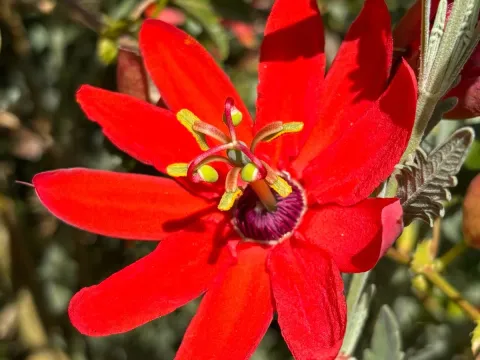
Passiflora manicata
Passiflora manicata
Passiflora manicata is a vigorous perennial vine belonging to the Passifloraceae family, originating from the Andean regions of Colombia, Ecuador, and Peru. It is widely recognized for its stunning, bright red flowers that stand out from other passion flower species.
What the section contains
Passiflora manicata
The plant is characterized by its trifoliate leaves and strong tendrils, which allow it to climb rapidly in its natural mountain habitat. In cultivation, it serves as a spectacular ornamental feature, demanding significant space for its extensive vining habit.
Cultivation requires well-draining, nutrient-rich soil to ensure healthy root development. The plant thrives in cool to moderate temperatures, typically between 15°C and 25°C, making it suitable for greenhouses in regions with harsh winters.
Light requirements are high, yet the plant benefits from protection against intense, direct afternoon sun which can scorch the foliage. Consistent moisture is essential, but the substrate must allow excess water to drain freely to prevent root suffocation.
Regular fertilization is necessary throughout the growing season to support the high metabolic needs of this fast-growing climber. Pruning should be performed annually to manage size and promote more prolific flowering in the following season.
Common pests include spider mites and whiteflies, especially when grown in indoor or glasshouse conditions with poor ventilation. Regular monitoring and maintaining high humidity can significantly reduce the pressure from these insects.
Fungal issues such as root rot represent the main health threat, usually triggered by poor drainage or overwatering. Using a porous growing medium and allowing the top layer of soil to dry slightly between waterings is the best preventive practice.