
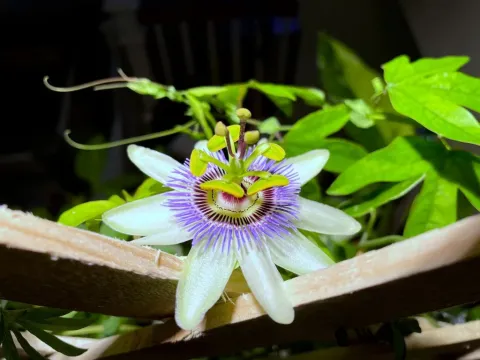
Passiflora kermesiana
Passiflora kermesiana
Passiflora kermesiana is a perennial vine belonging to the Passifloraceae family, originating from the tropical regions of Brazil. It is highly valued for its striking, distinctively shaped purple-red flowers which make it a prized specimen for botanical collections and ornamental horticulture.
What the section contains
Passiflora kermesiana
This species requires a tropical to subtropical climate to thrive, as it is frost-tender and struggles with temperatures below 10-15 degrees Celsius. In cultivation, it is often grown in controlled greenhouse environments to ensure consistent growth throughout the year.
The plant thrives in well-draining, nutrient-rich soil with a slightly acidic to neutral pH. A mix of peat, bark, and perlite is often recommended to simulate its natural epiphytic or forest-floor habitat and prevent root compaction.
Adequate sunlight is crucial for blooming; however, direct and intense sun can sometimes stress the plant, necessitating partial shade during the peak heat of the day. Proper spacing and airflow are essential to support its climbing nature and prevent moisture buildup.
Regular hydration is required during the active growing season, keeping the root ball consistently moist but never waterlogged. During the dormant season, watering should be significantly reduced to allow the plant a necessary resting period.
Spider mites are the most common pest problem for Passiflora kermesiana, particularly in indoor environments where air humidity levels are often too low for the plant's health.
Mealybugs and aphids frequently attack the new, tender growth and flower buds, potentially vectoring viruses and causing significant deformities in the plant foliage.
Root rot, caused by various soil-borne pathogens like Pythium, is a significant threat associated with poor drainage and excessive irrigation in containerized plants.
Fungal leaf spot diseases can occur if the foliage is kept wet for long periods without adequate ventilation, leading to premature leaf drop and reduced vigor.
Implementing an integrated pest management strategy, including manual cleaning and the judicious use of neem oil or insecticidal soaps, is effective for maintaining plant health.