
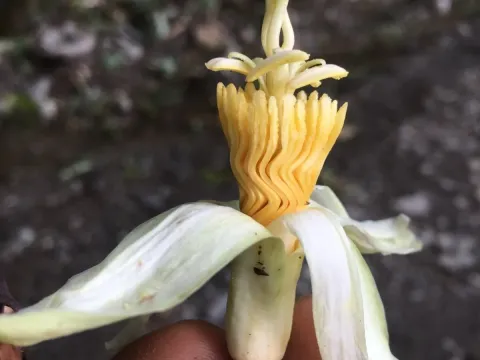
Passiflora macrophylla
Passiflora macrophylla
Passiflora macrophylla is a distinctive member of the Passifloraceae family, known for its non-climbing, shrub-like habit and exceptionally large, paddle-shaped leaves. Unlike typical passionflower vines, this species produces foliage that can exceed 50 centimeters in length, making it a botanical marvel for specialized growers.
What the section contains
Passiflora macrophylla
Seeds of this species exhibit dormancy and require careful preparation. Stratification or mechanical scarification is often necessary to improve germination rates. Sowing should be carried out in a sterile, well-draining substrate kept at a consistent temperature between 25-28 degrees Celsius to trigger growth.
Germination is notoriously slow and erratic, often taking several weeks to months. Providing a stable environment with bottom heat can significantly enhance the success rate. It is crucial to maintain moisture without saturating the medium to prevent pre-emergence damping-off.
As the seedlings develop, they should be transplanted into individual containers. Care must be taken not to disrupt the taproot, as Passiflora species are notoriously sensitive to root disturbance. Gradually acclimatizing the young plants to their growing environment is key to establishing a strong root system.
Young plants require consistent humidity and gentle light during the first stages of growth. Using light-colored pots can help reflect excessive heat in greenhouse conditions, protecting the sensitive root zone while the plant matures into a full-sized shrub.
Native to the tropical rainforests of Colombia and Ecuador, Passiflora macrophylla thrives in warm, humid conditions. It is not cold-hardy and must be kept in controlled environments such as greenhouses or conservatories to prevent damage from low temperatures.
Light management is critical. While the plant requires ample light to support its massive leaf surface area, direct, intense sunlight can scorch the foliage. Implementing 30-50 percent shade cloth is common in professional greenhouse settings to ensure optimal photosynthetic activity.
The soil profile should be rich in organic matter, such as high-quality peat, coco coir, and perlite for aeration. A pH range between 6.0 and 7.0 is ideal. The substrate must be porous enough to allow water to pass through freely, avoiding root suffocation.
Consistent watering is required, aiming to keep the root zone damp but not waterlogged. Given the plant's tropical origin, high relative humidity (above 70%) is essential. Frequent misting or the use of automated fogging systems is recommended in dry climates.
Regular fertilization with a balanced, liquid-formulated fertilizer is beneficial during the growing season. Reducing nitrogen levels in the late fall encourages the plant to harden off, preparing it for the shorter days of winter when growth naturally slows down.
Spider mites are the most persistent pest for Passiflora macrophylla, particularly when indoor humidity levels drop. These pests congregate on the underside of the broad leaves, causing stippling and eventual leaf loss if left unchecked.
Mealybugs also present a significant challenge, often hiding in the crevices of the leaf axils. Due to the large surface area of the leaves, manual removal is often difficult, necessitating the use of systemic insecticides or targeted biological control agents like predatory mites.
Root rot, caused by Pythium or Phytophthora species, is the primary disease threat. This usually occurs due to overwatering or inadequate drainage. Preventing this requires diligent monitoring of soil moisture and maintaining excellent air circulation around the base of the plant.
Powdery mildew can infect the foliage if air circulation is stagnant, especially in high-humidity greenhouses. Ensuring adequate spacing between plants and using oscillating fans can significantly reduce the risk of fungal proliferation.
Routine inspections are essential for early diagnosis. Monitoring for any yellowing, webbing, or abnormal spots on the leaves allows for immediate corrective actions, which are vital to preserving the plant's aesthetic value and long-term health.