
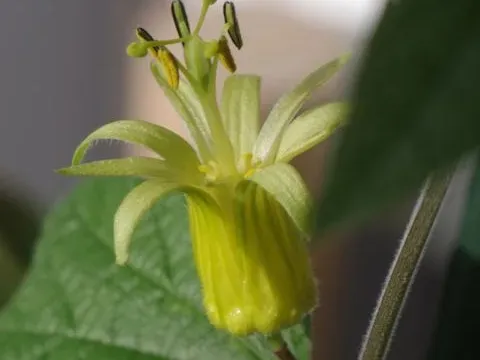
Passiflora citrina
Passiflora citrina
Passiflora citrina is a member of the Passifloraceae family, originating from the tropical rainforests of Central America. This vigorous, evergreen climbing vine is prized for its unique, bright yellow flowers.
What the section contains
Passiflora citrina
Propagating the plant is typically done via seeds or cuttings. Seeds should be sown in a high-quality, well-draining potting mix. Before sowing, soaking seeds in warm water for 24 hours can significantly improve germination rates.
The ideal temperature for germination is between 25°C and 28°C. Providing bottom heat during the early stages of development ensures a more uniform and faster emergence of seedlings.
Stem cuttings are an efficient method for cloning, especially when taken from non-flowering shoots in late spring. Cuttings should be kept in a humid environment until a healthy root system is established.
Once established, the plant requires a structure such as a trellis or wire mesh to support its rapid upward growth. Regular pruning is necessary to maintain size and encourage new blooming branches.
Passiflora citrina thrives in bright, indirect light. While it tolerates some direct sunlight, it should be protected from harsh midday rays that can scorch the foliage in extremely hot climates.
The soil should be nutrient-rich and porous. A mixture of peat moss, pine bark, and perlite provides the necessary drainage while maintaining consistent moisture levels around the roots.
Watering frequency depends on the season; keep the soil consistently moist during the active growing months but reduce water significantly during the winter resting period.
High humidity is essential for the health of Passiflora citrina. Regular misting or the use of an automated humidifier is recommended if the plant is kept indoors, particularly in centrally heated rooms.
Fertilizer requirements include a balanced NPK ratio (e.g., 10-10-10) during the spring and summer months to support both lush foliage growth and prolific flower production.
Spider mites are the most prevalent pest for this species, thriving in dry and warm conditions. They can be detected by fine webbing on the undersides of leaves and overall wilting.
Aphids and mealybugs can also infest the tender new growth of the vine. If left untreated, they can cause stunted development and transmit viral diseases to the plant.
Fungal issues, such as root rot, often occur due to poor drainage or overly compacted soil. Symptoms include yellowing leaves and a soft, decaying appearance at the base of the stem.
To manage these threats, integrate chemical controls like horticultural oils or systemic insecticides when necessary. Always isolate new plants to prevent the spread of hidden pests.
Proper air circulation is a critical preventative measure against fungal outbreaks. Removing dead or diseased foliage promptly helps maintain a healthy growing environment for the plant.