
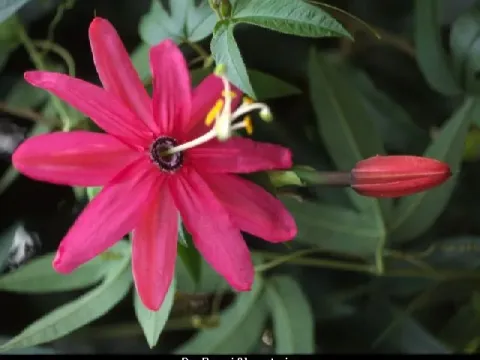
Passiflora exoniensis
Passiflora exoniensis
Passiflora exoniensis is a striking hybrid vine belonging to the Passifloraceae family. It is a cross between Passiflora antioquiensis and Passiflora mollissima, renowned for its vigorous growth and long, pendant, rose-red flowers that showcase the beauty of Andean passion flowers.
What the section contains
Passiflora exoniensis
Regarding climatic requirements, this species thrives in cool, humid environments. Unlike lowland tropical passion flowers, it struggles in intense heat and prefers moderate temperatures, ideally between 15°C and 22°C, making it an excellent choice for temperate greenhouses or conservatories.
The soil must be well-draining, rich in organic matter, and slightly acidic. It is crucial to maintain consistent soil moisture, as the plant does not tolerate prolonged dryness, yet it is equally susceptible to root damage caused by waterlogged soil conditions.
Light management is essential for successful flowering. The vine requires bright, indirect light; harsh, direct sunlight during the middle of the day can scorch the foliage. Providing a shaded environment or filtered light helps in maintaining healthy green leaf growth.
Economically and horticulturally, the plant is used primarily for ornamental purposes. It is a prized specimen for indoor gardens and conservatories where its long, pendulous stems can be trained along wires or trellises to create a dramatic aesthetic effect.
The most common pests affecting Passiflora exoniensis are spider mites, which can proliferate rapidly in low-humidity environments often found indoors during winter months.
Mealybugs are another frequent threat, often hiding in the leaf axils or along the stems, which can weaken the plant and lead to the development of sooty mold on the foliage.
Root rot is the primary physiological disease associated with poor cultivation practices. Overwatering combined with heavy, non-porous soil media provides the perfect conditions for fungal pathogens to attack the roots.
Aphids may occasionally attack the tender new growth and developing buds, requiring manual removal or treatment with appropriate insecticidal soaps if an infestation occurs.
Regular sanitation, such as removing fallen leaves and pruning dead or overcrowded branches, is key to preventing the buildup of pests and maintaining the overall vigor of the vine.