
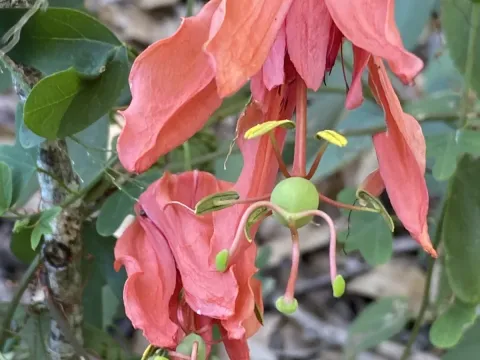
Passiflora aurantia
Passiflora aurantia
Passiflora aurantia is a stunning species belonging to the Passifloraceae family. It is a vigorous evergreen climber widely recognized for its unique flowers that transition from pale cream to deep orange or red, making it a favorite for ornamental gardening.
What the section contains
Passiflora aurantia
Native to Australia and several Pacific Islands, this plant is well-adapted to tropical and subtropical climates. In cultivation, it is primarily used as an ornamental vine in conservatories, glasshouses, or warm outdoor gardens in frost-free regions.
For optimal growth, Passiflora aurantia requires well-draining, nutrient-rich soil. It thrives in loamy substrates with a slightly acidic to neutral pH. Proper drainage is essential, as the roots are highly susceptible to rot if left standing in saturated soil conditions.
The plant performs best in temperatures ranging from 18°C to 25°C. It prefers bright, indirect light; harsh, direct midday sun can scorch the foliage, so partial shade or filtered sunlight is recommended for outdoor specimens in very hot climates.
Regular maintenance involves pruning to control its growth and stimulate flowering. Feeding with a balanced, slow-release fertilizer during the active growing season helps maintain plant vigor and enhances the vibrant color of the blooms throughout the flowering period.
Spider mites are a significant challenge, especially in indoor environments with low humidity. Regular misting and maintaining adequate air circulation are effective ways to mitigate the risk of these small but destructive pests.
Aphids often target new shoots and developing flower buds, sucking sap and weakening the plant. Systematic insecticidal soap applications are usually sufficient to control infestations before they cause severe damage to the aesthetic appeal of the vine.
Root rot, often caused by Fusarium or Pythium species, is a common threat triggered by poor drainage or overwatering. Infected plants often show signs of wilt and stunted growth, requiring immediate repotting into fresh, sterilized soil and pruning of damaged roots.
Powdery mildew can affect the leaves during periods of high humidity and stagnant air. Keeping the foliage dry and ensuring sufficient spacing between plants can help prevent the spread of fungal spores and maintain overall plant health.
Whiteflies can also become a nuisance in greenhouse settings. Implementing integrated pest management, including the use of yellow sticky traps and horticultural oils, is highly recommended to keep populations at bay without relying solely on chemical pesticides.