
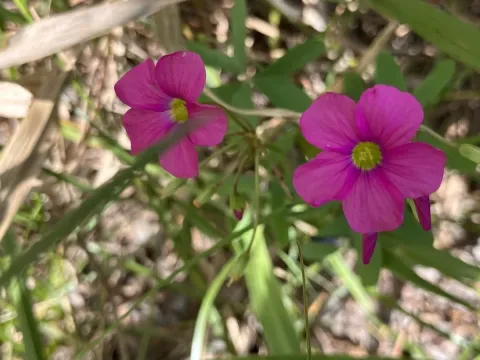
Oxalis semiloba
Oxalis semiloba
Oxalis semiloba belongs to the Oxalidaceae family. This perennial species is native to regions of Africa, where it has adapted to specific climatic conditions, often associated with seasonal rainfall and sunny, open habitats.
What the section contains
Oxalis semiloba
The plant requires well-drained, nutrient-rich soil to thrive. Ideally, the substrate should be slightly acidic to neutral to ensure the efficient uptake of minerals. A sandy loam texture is considered optimal for root health and expansion.
Climate requirements involve consistent warmth, as the plant is not frost-tolerant. It performs best in bright, indirect light, though it can tolerate full sun provided that soil moisture is adequately maintained throughout the active growing phase.
Botanically, Oxalis semiloba features distinctive foliage and a storage organ, such as a bulb or thick rhizome, which stores nutrients. This adaptation allows the plant to go dormant during unfavorable weather conditions, which is a key survival strategy.
Regular maintenance involves periodic fertilization with balanced NPK formulas during the peak of the growing season. Irrigation must be precise; allowing the top layer of the soil to dry out between waterings helps prevent physiological disorders.
Root rot and crown rot represent the most significant fungal threats to this species. These are primarily caused by over-irrigation or planting in compacted, poorly draining soils, which creates an anaerobic environment for the roots.
Insect pests such as spider mites and aphids are common in indoor or greenhouse settings. They proliferate rapidly in dry, warm air and can cause significant leaf damage, weakening the overall plant structure and growth vigor.
Fungal leaf spots can also occur if the foliage remains wet for extended periods. Improving air circulation around the plants is essential for mitigating the risk of pathogen spread, especially in high-density cultivation areas.
To control pest outbreaks, integrated pest management (IPM) is recommended. This includes physical removal of infested leaves, the use of beneficial insects, and application of soft soaps or horticultural oils as a first line of defense.
Maintaining hygiene in the cultivation area is crucial for disease prevention. Removing debris and sterilizing gardening tools regularly helps prevent the transmission of bacteria and fungal spores from one season to the next.