
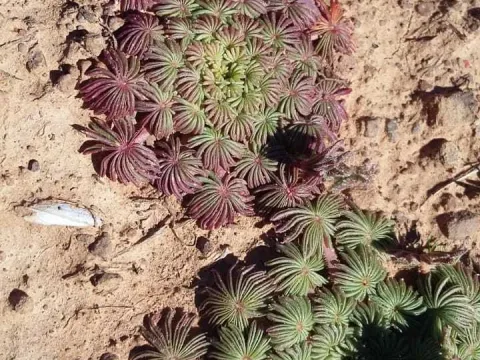
Oxalis palmifrons
Oxalis palmifrons
Oxalis palmifrons is a remarkable bulbous perennial belonging to the Oxalidaceae family. Native to the arid regions of Southern Africa, this plant has evolved unique physiological mechanisms to survive in harsh, drought-prone environments.
What the section contains
Oxalis palmifrons
The botanical structure of the plant is highly distinctive, featuring a short, succulent stem topped with rosettes of narrow, fan-shaped leaflets. This arrangement mimics the appearance of a miniature palm tree, which is the primary reason for its popularity among collectors.
Regarding soil requirements, Oxalis palmifrons demands a highly inorganic and well-draining substrate. A mix consisting primarily of grit, coarse sand, and a small percentage of volcanic rock or pumice is essential to prevent water retention around the caudex.
Climatic conditions should reflect the plant's natural habitat. It thrives during cooler periods with moderate temperatures, typically between 10 and 15 degrees Celsius, while requiring a complete dormancy period during the hottest summer months when it should be kept dry.
Light intensity is another critical factor for successful cultivation. The plant requires bright, indirect light to maintain its compact, dense rosette structure. Excessive exposure to direct sunlight can damage the leaves, while insufficient light leads to etiolation and loss of form.
The most significant threat to Oxalis palmifrons is root rot, caused primarily by poor drainage or overwatering during the dormant phase. Once the caudex or bulbs begin to rot, the plant is very difficult to save.
Spider mites are a common pest problem, especially in dry, indoor environments. These pests thrive in low humidity and can quickly drain the sap from the delicate leaflets, causing them to lose their vibrant color and texture.
Mealybugs are another persistent pest that often hides within the tight crevices of the leaf rosettes. Frequent inspection is necessary to catch infestations early, as their presence can weaken the plant and facilitate secondary infections.
Fungal pathogens can arise if there is poor airflow around the foliage. Ensuring that the environment is well-ventilated is a standard agricultural precaution to keep the plant healthy and prevent the spread of mold on decaying leaves.
Management of the dormancy cycle is key to avoiding biological threats. If the plant is forced into growth at the wrong time due to improper environmental cues, it becomes significantly more susceptible to physiological stress and subsequent pest attacks.