
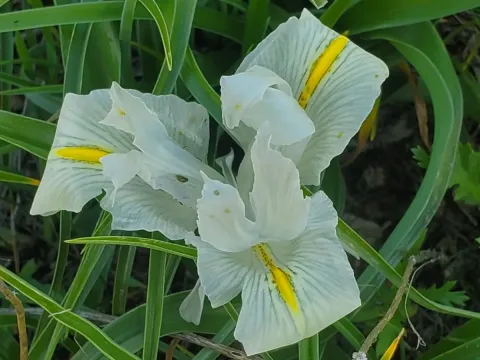
Palestinian iris
Xiphion palaestinum
The Palestinian iris (Xiphion palaestinum), a member of the Iridaceae family, is a bulbous perennial native to the Mediterranean region and the Middle East. It is recognized for its early flowering cycle and unique adaptation to arid environments.
What the section contains
Palestinian iris
This species thrives in habitats characterized by dry, rocky soils and high solar radiation. Botanically, it produces slender, sword-like leaves and attractive flowers that emerge during the cooler, wetter months of the year.
Optimal cultivation requires sandy, well-draining soil with a neutral to slightly alkaline reaction. The plant is highly sensitive to waterlogging, which often leads to bulb rot, particularly during the dormant summer period.
Exposure to full sun is essential for the plant to achieve vigorous growth and proper flower development. Any shade provided by surrounding vegetation should be strictly avoided to ensure the plant's health and longevity.
Agrotechnical management focuses on simulating the native Mediterranean climate. This includes providing water during the winter growing season while ensuring the soil remains dry and warm throughout the summer months.
Fungal pathogens, particularly those causing root and bulb rot, represent the most significant threat to the Palestinian iris. These diseases are almost exclusively linked to excessive soil moisture and poor drainage.
Pests such as bulb mites and various aphids can infest the plant, causing direct damage to the foliage and potentially weakening the bulb. Integrated pest management should be applied to control populations.
Weed competition is particularly detrimental in the early stages of the growing season. The removal of weeds is necessary to prevent excessive competition for nutrients and to maintain adequate airflow around the plant's base.
Physiological damage can occur due to sudden drops in temperature if the bulbs are not properly protected in non-native, colder climates. Mulching may be necessary in regions prone to heavy frost to protect the dormant bulbs.
Virus transmission by insect vectors is a risk factor that requires ongoing observation. Infected plants should be isolated or removed to prevent the spread of viral pathogens to healthy specimens in the collection.