
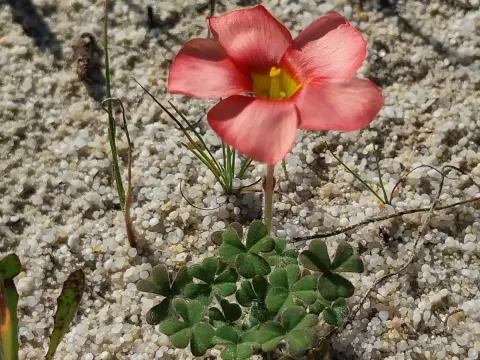
Oxalis obtusa
Oxalis obtusa
Oxalis obtusa is a small, bulbous perennial plant belonging to the Oxalidaceae family. Native to the Cape region of South Africa, it has evolved to thrive in environments characterized by distinct wet growing seasons and hot, dry dormant phases.
What the section contains
Oxalis obtusa
The plant grows from small, tunicated bulbs and produces a basal rosette of clover-like, trifoliate leaves. Its flowers, which bloom in shades ranging from deep pink to yellow and white, are the primary focus of its ornamental value.
Cultivation of this species requires a well-draining, gritty soil mix. Because the bulbs are sensitive to rot, the use of coarse sand or perlite in the potting medium is essential to ensure adequate moisture regulation and root aeration.
In terms of light, Oxalis obtusa requires bright, filtered sunshine. While it thrives in open situations, intense mid-day heat in confined spaces can be damaging, so partial shade during the peak of summer is often recommended for pot-grown specimens.
Agricultural management centers on the bulb's dormancy cycle. Once flowering ceases and foliage begins to senesce, irrigation must be halted completely. Keeping the bulbs dry during their rest period is vital for successful blooming in the subsequent season.
The primary agricultural threat to Oxalis obtusa is fungal rot, specifically caused by Phytophthora or Pythium species during periods of poor drainage. Overwatering is the most common cause of plant loss in both professional and hobbyist collections.
Spider mites (Tetranychidae) are significant pests, especially in indoor conditions or greenhouses with low humidity. They congregate on the undersides of leaves, causing a stippled, chlorotic appearance that eventually leads to leaf drop.
Mealybugs (Pseudococcidae) frequently infest the leaf axils and the crowns of the plants. Their presence often coincides with the development of sooty mold, which grows on the honeydew excreted by the insects, further hindering plant photosynthesis.
Botrytis blight represents a major threat during humid, stagnant weather conditions. This fungus manifests as grey, fuzzy growth on leaves and flowers, eventually causing rapid tissue collapse if the affected parts are not removed.
Integrated pest management (IPM) is encouraged, utilizing beneficial insects or targeted sprays to manage infestations. Ensuring high air circulation around the plants remains the most effective prophylactic measure against both fungal and insect pressures.