
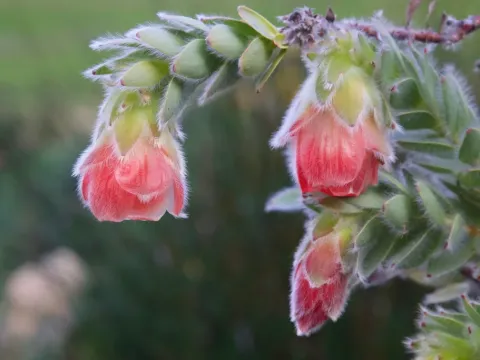
Orothamnus
Orothamnus Pappe ex Hook.
Orothamnus (Orothamnus Pappe ex Hook.) is a distinguished genus within the Proteaceae family, native to the rugged mountainous regions of the Western Cape in South Africa. It is a slow-growing shrub that represents a botanical rarity in the horticultural world.
What the section contains
Orothamnus
The plant features woody, upright stems and narrow, sclerophyllous leaves. Its most remarkable trait is the solitary, nodding inflorescence, which is protected by vibrant, rose-red leathery bracts, making it a masterpiece of floral architecture.
Cultivation requirements for Orothamnus are extremely demanding, as the plant is adapted to cool, misty montane environments. It requires a specific Mediterranean-type climate with well-defined seasonal cycles to thrive under managed conditions.
Soil management is critical for this crop: the substrate must be highly acidic, well-draining, and exceptionally low in phosphorus. Standard agricultural fertilizers often contain excessive levels of phosphorus, which can be fatal to the delicate proteoid root system of the plant.
In terms of commercial usage, Orothamnus is highly prized in the specialized luxury cut-flower industry. Its limited natural distribution and sensitivity to environmental changes make it a niche crop for elite nurseries and botanic gardens.
The primary threat to Orothamnus health is infection by Phytophthora species, which are soil-borne oomycetes. These pathogens exploit poor drainage or compacted soil conditions to destroy the plant's vascular system.
Pests such as scale insects and mealybugs can pose a serious challenge by clustering on stems and foliage. Their feeding habits cause chlorosis and can eventually kill individual branches if not controlled with appropriate systemic treatments.
Poor ventilation in greenhouse environments significantly increases the risk of fungal infections. Ensuring constant but gentle airflow is vital to maintain the hygiene of the foliage and prevent moisture buildup.
The symbiotic relationship between the plant and specific soil fungi must be preserved. Disruption caused by chemical pesticides or harsh fungicides can damage this mycorrhizal-like balance, leading to nutrient deficiencies.
Competition from invasive plant species is a constant threat in outdoor nurseries. Orothamnus lacks the vigor to compete with faster-growing weeds, requiring meticulous manual maintenance to keep the planting zone clear.