
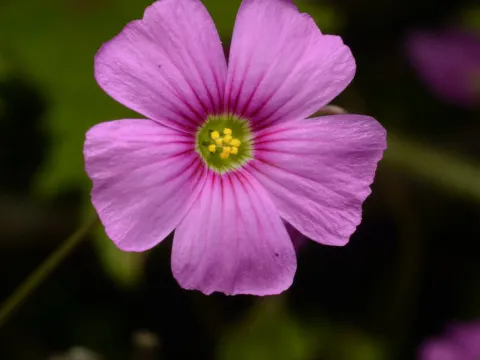
Pink wood-sorrel
Oxalis rosea
Planting of Oxalis rosea, commonly known as pink wood-sorrel, is best performed in early spring once the risk of heavy frost has passed and soil temperatures have reached at least 10°C.
What the section contains
Pink wood-sorrel
The bulbs or small tubers should be planted at a depth of 3 to 4 centimeters. When planting in garden beds, ensure a spacing of approximately 10 centimeters between individual plants to allow for sufficient spread and airflow.
For container gardening, planting can begin as early as late winter in a controlled indoor environment, enabling the plants to be moved outdoors as soon as the weather permits stable growth.
It is recommended to soak the bulbs in a fungicide solution prior to planting to prevent early-stage soil-borne diseases that can affect the plant's emergence and overall vigor.
The growth medium must be light and well-drained. If the local soil is heavy or clay-like, incorporating coarse sand or perlite is essential to ensure that the bulbs do not sit in stagnant water.
Oxalis rosea belongs to the Oxalidaceae family and is native to South America, specifically Chile. It thrives in positions that provide bright, indirect light, though it can tolerate partial shade during the hottest parts of the day.
The plant requires a soil pH that is slightly acidic to neutral. High-quality potting mixes designed for ornamental bulbous plants work best, ensuring high drainage capacity to mimic the plant's natural growing conditions.
Watering should be consistent but moderate. During the peak growing season, the substrate should be kept slightly moist, but never waterlogged. Always allow the surface to dry out before the next irrigation cycle.
The optimal temperature range for the development of Oxalis rosea is between 18°C and 22°C. The species is not frost-hardy and requires protection or indoor storage in regions with cold winters.
Regular fertilization is not mandatory but can be beneficial during the active flowering phase. Use a balanced, water-soluble fertilizer at half-strength once every three weeks to maintain plant health.
The most frequent pests affecting pink wood-sorrel include spider mites, which are particularly active in dry indoor conditions, and aphids that cluster on the delicate flower stalks and foliage.
Fungal issues, such as root rot and gray mold (Botrytis), are significant threats. These are almost always caused by excessive soil moisture or poor ventilation around the plant's base.
Management of pest populations requires the use of appropriate horticultural oils or systemic insecticides, applied early to prevent the rapid multiplication of the insects.
Maintaining proper hygiene by removing withered leaves and stems promptly is a critical cultural practice to limit the spread of fungal spores in the growing area.
To avoid recurring problems, practice proper crop rotation or substrate replacement in pots every year to minimize the build-up of harmful soil pathogens that thrive in moist environments.