
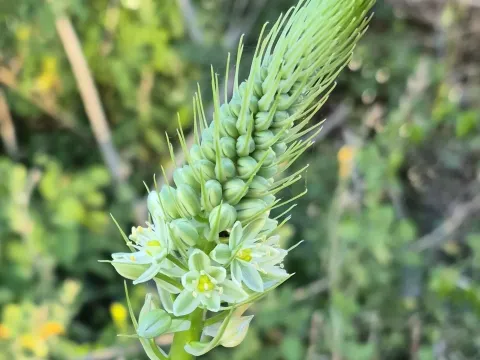
Ornithogalum longibracteatum
Ornithogalum longibracteatum
Ornithogalum longibracteatum, commonly referred to as the Pregnant Onion or False Sea Onion, is a bulbous perennial belonging to the Asparagaceae family. The plant is easily identified by its large, greenish bulb that sits partially above the soil surface and produces numerous small bulbils over time.
What the section contains
Ornithogalum longibracteatum
Native to Southern Africa, this species thrives in climates that mimic its natural habitat. It is widely cultivated as an indoor decorative plant due to its unique appearance, characterized by long, fleshy leaves that arch downwards, and tall flower spikes bearing white-greenish blooms.
The cultivation requirements are relatively straightforward, focusing on bright, indirect light and well-draining soil. It is effectively a succulent in its water requirements, meaning it prefers to dry out between waterings to prevent root and bulb rot, which are the most common fatal errors in care.
Temperature-wise, it prefers a warm environment ranging between 18°C and 25°C. During the winter, the plant benefits from a slight drop in temperature and reduced water, which mimics the dormant cycle found in its native environment and encourages more robust growth in the spring.
Regarding its utility, the plant is historically significant in traditional medicine. The sap of the bulbs is known for its high content of alkaloids, which are sometimes used in topical preparations for their analgesic and rubefacient properties, though professional medical caution is strictly advised.
Like many bulbous succulents, Ornithogalum longibracteatum is susceptible to specific pests, particularly when kept in poorly ventilated indoor conditions. Spider mites and scale insects are the primary offenders that target the foliage, causing discoloration and stunted development.
Fungal pathogens represent the most significant threat to the health of the bulb. Fusarium rot and bacterial soft rot can occur if the growing medium remains consistently waterlogged or if high humidity prevents the soil surface from drying properly between watering intervals.
Management of these threats involves proactive cultural practices. This includes ensuring that the plant is potted in a pot with adequate drainage holes and using a grit-heavy soil mix that prevents water retention around the sensitive basal plate of the bulb.
When infestation or disease occurs, immediate intervention is necessary. This involves isolating the plant to prevent the spread of pests, manually removing scale insects, and, in severe cases of rot, excising the infected tissues followed by treatment with a fungicide or charcoal dust.
Safety is a critical aspect of plant management. The sap of the Pregnant Onion is an irritant and can cause dermatological reactions upon contact. Always wear protective gloves when handling, transplanting, or pruning the plant to avoid accidental contact with sensitive skin or eyes.