
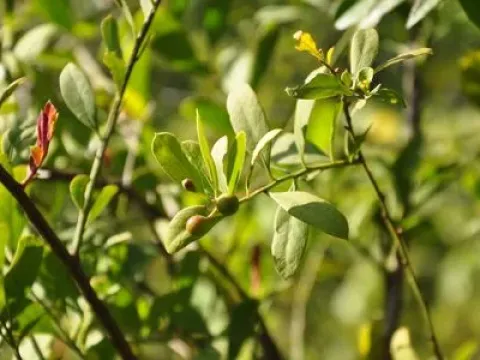
Osyris quadripartita
Osyris quadripartita
Osyris quadripartita is an evergreen hemiparasitic shrub belonging to the Santalaceae family. Native to the Mediterranean region, Africa, and parts of Southern Asia, this plant occupies niches in dry, rocky, or scrub-like environments.
What the section contains
Osyris quadripartita
The species is characterized by its hemiparasitic nature, where it utilizes specialized root attachments known as haustoria to extract water and mineral nutrients from the roots of host plants. This strategy allows it to thrive in nutrient-poor soils where other shrubs might struggle.
For optimal growth, the species requires well-drained, porous soil and high levels of sunlight exposure. It is highly drought-tolerant, making it a potential candidate for xeriscaping or ecological restoration projects in arid climate zones.
Cultivation practices are non-standard due to the requirement for specific host plants to maintain the lifecycle of Osyris. Farmers and botanists must ensure that the host plant is sufficiently healthy to support the hemiparasite without being overwhelmed by its presence.
The economic value of this crop is primarily related to traditional medicinal uses and local ecological functions. It is not currently utilized as a large-scale agricultural crop due to the biological complexity of its symbiotic requirements.
The primary threats to Osyris quadripartita are fungal infections, particularly root rot, caused by excessive soil moisture and poor drainage. Maintaining a dry root zone is critical for the long-term health of the shrub.
Common pests like aphids and scale insects can affect the plant in greenhouse environments or crowded garden settings. However, the plant's high tannin content provides a natural defense mechanism against many typical foliage-feeding insects.
Environmental degradation, including overgrazing and land clearing, poses a significant risk to native populations. The loss of host species in the ecosystem directly reduces the survivability of the parasitic Osyris population.
Climatic changes that alter rainfall patterns can stress both the host and the parasite, potentially leading to increased vulnerability to disease. Monitoring the vitality of the host plant is essential for detecting early signs of decline in the Osyris specimen.
Effective management includes protecting the soil structure and avoiding aggressive chemical treatments that might harm the host plant. A balanced approach to the ecosystem ensures the longevity of this unique botanical specimen.