
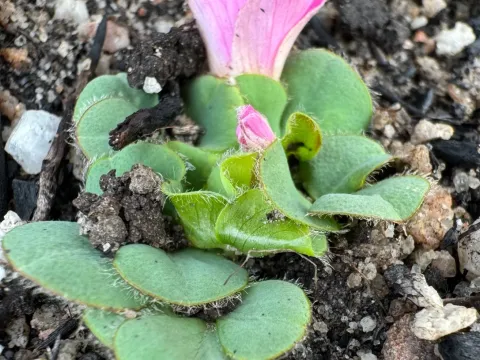
Purple woodsorrel
Oxalis purpurea
Purple woodsorrel (Oxalis purpurea) is a bulbous perennial belonging to the Oxalidaceae family. Native to South Africa, it is widely recognized for its vibrant flowers and distinctive, deep-hued foliage, making it a popular choice for ornamental use.
What the section contains
Purple woodsorrel
The crop thrives in well-draining, slightly acidic soil. In terms of cultivation, it requires a sunny location to ensure proper flowering and compact growth. Heavy soils must be amended with grit or perlite to facilitate drainage and prevent bulb rot.
Temperature requirements are strictly defined by its Mediterranean-like origin. It prefers moderate temperatures and is sensitive to frost, which limits its outdoor cultivation to mild climates or protected indoor containers during the cold winter months.
Watering management is crucial; the soil should be kept moderately moist during the active growing season but allowed to dry out significantly during the dormancy phase to mimic its natural desert-like habitat in South Africa.
Commercially, this species is primarily used in the horticultural industry for garden rockeries, pots, and hanging baskets. Its rapid growth cycle allows for frequent propagation, making it a reliable crop for specialized plant nurseries.
The most significant threats to Oxalis purpurea are fungal diseases related to excess moisture. Gray mold (Botrytis) frequently occurs in poor air circulation environments, leading to soft rot in leaves and eventually damaging the underground bulbs.
Pests such as spider mites are major challenges, especially when the plant is grown indoors or in greenhouse conditions. They thrive in dry, warm environments and can quickly cause yellowing and necrosis of the foliage if left untreated.
Aphids can also infest the young shoots and flower buds, causing stunted growth and deformity. Effective management requires constant monitoring and the use of targeted acaricides or insecticidal soaps when an outbreak is detected.
Root system health should be prioritized by practicing strict hygiene in the growing medium. Using sterilized soil and removing dead plant debris prevents the buildup of pathogens that could lead to systemic infections.
- Gray mold (Botrytis cinerea).
- Spider mite infestations.
- Aphid colonization on flower buds.
- Soil-borne root rot pathogens.