
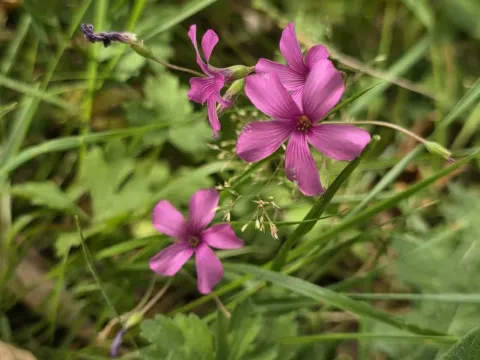
Pink-sorrel
Oxalis articulata
Pink-sorrel is primarily propagated through the division of its fleshy, tuberous rhizomes. The ideal time for planting in the garden is during the spring season, once the danger of frost has passed.
What the section contains
Pink-sorrel
Rhizomes should be planted at a shallow depth of about 5 centimeters in well-prepared, loose soil. Spacing should be approximately 20 centimeters apart to allow for proper airflow and root expansion.
Propagation from seed is also possible, performed in early spring under controlled indoor conditions. Seeds are sown on the surface of moist, light compost and kept in a warm, bright place until germination occurs.
Once seedlings develop their first true leaves, they can be hardened off and transplanted to their permanent location. This early stage requires consistent moisture to ensure the survival of young plants.
For container gardening, the same planting depth applies, ensuring the container has sufficient drainage holes to prevent the accumulation of excess water around the sensitive root structure.
Belonging to the Oxalidaceae family, this perennial herb originates from South America. It is characterized by its distinct tuberous rootstock and dense clusters of leaves, which thrive in humid environments.
The plant requires fertile, well-draining soil with a neutral to slightly acidic pH level. A mix of peat and sand is often recommended to maintain the necessary structure and porosity for the roots.
While the plant enjoys a sunny position, it performs best in partial shade, especially during the hottest hours of the day. Too much intense sun can scorch the foliage and reduce blooming intensity.
Temperature-wise, it prefers mild conditions between 18 and 22 degrees Celsius. It is not fully frost-hardy and requires significant winter protection or to be brought indoors in cooler climate zones.
Watering must be regular to keep the soil lightly moist. However, it is critical to avoid waterlogging, as the fleshy rhizomes are highly susceptible to rotting if left in saturated soil conditions.
The most significant threat to Pink-sorrel is root rot, triggered by overwatering or poor soil drainage. This condition can quickly destroy the plant, starting from the rhizomes and moving upward.
Spider mites are common pests that thrive in dry environments. They cause stippling and discolouration on the leaves, ultimately weakening the plant if not addressed with early intervention.
Aphids can infest the flower stems and soft foliage, particularly in early spring when the plant is pushing out new growth. Regular inspections and the use of soft soap solutions are effective control methods.
Powdery mildew is another occasional issue caused by poor air circulation and cool, damp weather. Maintaining sufficient spacing between individual plants helps mitigate this risk significantly.
General hygiene, such as removing dead leaves and weeds from the surrounding area, is essential for preventing the spread of diseases and reducing the attractiveness of the site to various pests.