
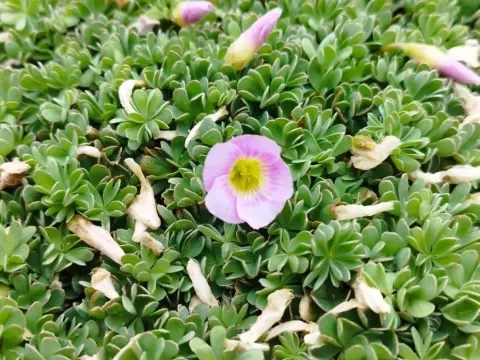
Scurvygrass sorrel
Oxalis enneaphylla
Scurvygrass sorrel (Oxalis enneaphylla) belongs to the Oxalidaceae family and is a distinctive perennial herb native to the Falkland Islands and southern South America. It is characterized by its fleshy rhizomes and attractive grey-green foliage that forms dense mats.
What the section contains
Scurvygrass sorrel
Successful cultivation requires a well-drained, gritty, and slightly acidic soil environment. This plant is a typical inhabitant of rock gardens, where its specific water management needs can be met by providing excellent drainage to prevent winter rotting.
The climate requirements include cool, temperate summers and protection from intense, direct sunlight. In warmer regions, it should be placed in a position that receives morning light but is shaded during the hottest parts of the day to avoid heat stress.
Agrotechnical maintenance focuses on providing adequate moisture during the growing season while ensuring the soil dries out sufficiently between waterings. In winter, keeping the plant relatively dry is essential for its survival, especially in regions with high precipitation.
Propagation is most commonly achieved by carefully dividing the fleshy rhizomes during the dormant period. Using a sharp, sterilized knife is recommended to ensure clean cuts, followed by immediate replanting into a suitable mineral-rich substrate.
The primary threats to Oxalis enneaphylla are soil-borne fungi and crown rot, primarily triggered by poor soil drainage. Maintaining a dry crown area by using a top-dressing of gravel is a vital cultural practice to mitigate these risks.
Slugs and snails are the most significant pest threats, as they are attracted to the succulent foliage. Monitoring during damp weather and using physical barriers or organic bait can help maintain the health and aesthetic appearance of the plant.