
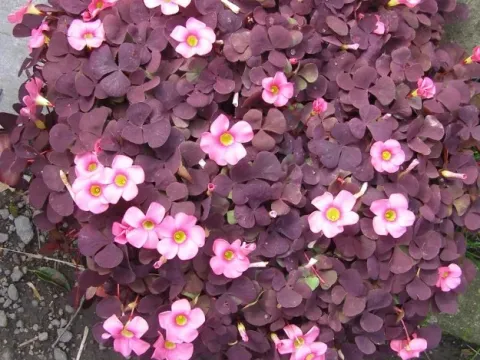
Purple wood sorrel
Oxalis purpurata
Purple wood sorrel (Oxalis purpurata) belongs to the Oxalidaceae family and is recognized as a distinctive perennial plant. Originating from South Africa, this species has gained popularity in global horticulture due to its unique aesthetic properties and resilience in temperate climates.
What the section contains
Purple wood sorrel
The crop requires bright, indirect light to maintain its vibrant leaf color and compact growth habit. Exposure to direct afternoon sunlight should be avoided in warmer regions to prevent leaf scorching and excessive dehydration of the foliage.
Soil requirements focus on high aeration and excellent drainage capacity. A mixture consisting of peat, sand, and garden loam creates an ideal environment for the root system, preventing waterlogging which is a primary cause of bulb failure.
Water management is essential: the soil should be kept moderately moist during the active growing season but allowed to dry out significantly between watering sessions. During dormancy, watering should be reduced to a minimum to ensure the plant rests properly.
Economically, this plant is primarily utilized in landscape gardening, vertical gardens, and indoor potted plant production. Its ease of propagation through bulb division makes it a valuable species for nurseries focusing on decorative bulbous plants.
Fungal diseases, specifically Botrytis and root rot, represent the most significant threats to the crop. These pathogens typically emerge in poorly ventilated areas with excessive moisture, necessitating regular inspection of the crown and soil surface.
Pests such as spider mites and aphids are common challenges. These insects can quickly colonize the undersides of the leaves, resulting in wilting and discoloration. Early detection through regular monitoring is key to successful management.
Mealybugs can often infest the stems and leaf axils, requiring targeted treatment with horticultural oils or insecticidal soaps. Maintaining proper plant spacing helps reduce the likelihood of pest outbreaks spreading between individual plants.
Root rot is largely avoided by ensuring that the potting medium remains loose and that drainage holes in containers are never obstructed. If root rot occurs, the affected parts must be trimmed and the plant replanted in sterile media.
General hygiene, such as removing dead foliage and maintaining clean growing areas, significantly lowers the risk of pathogen accumulation. Balanced fertilization supports the plant's natural defense mechanisms against minor environmental stressors.