
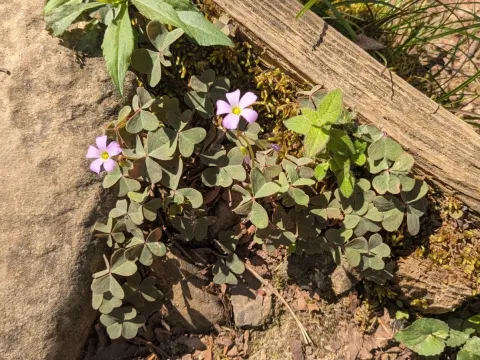
Violet wood sorrel
Oxalis violacea
Violet wood sorrel (Oxalis violacea) is a perennial bulbous plant belonging to the Oxalidaceae family. Native to North America, this species is commonly found in open woodlands, rocky slopes, and meadows where it thrives under specific ecological conditions.
What the section contains
Violet wood sorrel
The plant is botanically distinguished by its compound, trifoliate leaves that often feature a purple tint on the undersides. It grows from a small, scaly bulb that stores nutrients, allowing the plant to remain dormant during unfavorable weather conditions.
Regarding climate, this species prefers locations with bright, filtered light. While it can adapt to partial shade, consistent exposure to gentle sun is essential for promoting healthy leaf coloration and abundant flowering throughout the spring season.
The soil requirements are strict: the plant necessitates well-draining, slightly acidic to neutral soil. Compacted or waterlogged soils are detrimental to the root system, often causing the bulbs to rot within a short period.
Cultivation involves maintaining a stable moisture level without oversaturating the growing medium. During the dormant phase, which usually follows the flowering period, water supply should be significantly reduced to mimic the natural drying cycle of its native habitat.
The most significant threat to violet wood sorrel is fungal disease caused by improper watering techniques. Phytophthora and other root rots are frequent issues in heavy, poorly aerated substrates, requiring careful management of irrigation schedules.
Pests such as aphids are frequent intruders, particularly during the active growth phase. If left untreated, aphid colonies can weaken the plant, reducing its vigor and aesthetic value, so early intervention with mild soaps or insecticides is recommended.
Spider mites are another common challenge, especially in environments with low humidity. Symptoms include a mottled appearance of the leaves and fine webbing, which can be managed by increasing humidity levels and using effective miticides.
Rust diseases may affect the foliage, appearing as reddish-brown spots. Sanitation is the primary defense, involving the removal of affected leaves to prevent the spores from spreading to healthy plant tissues nearby.
Slugs and snails are particularly problematic for young shoots. Using physical barriers like copper tape or crushed eggshells, or employing bait stations, helps protect the plants from severe defoliation during the early stages of the growing season.