
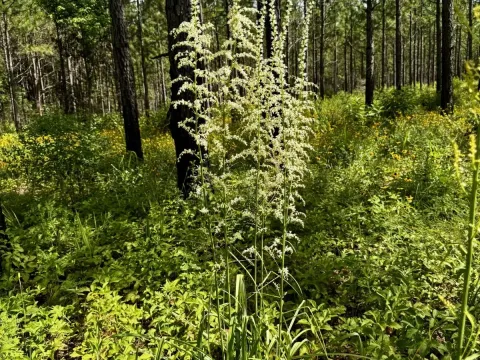
Eastern featherbells
Stenanthium gramineum
Stenanthium gramineum, commonly known as Eastern featherbells, is a member of the Melanthiaceae family. It is native to North America, primarily inhabiting wet meadows, floodplains, and forested areas where moisture levels remain consistently high throughout the year.
What the section contains
Eastern featherbells
The plant is defined by its slender, grass-like basal foliage, which gives it a refined and delicate appearance. In mid-to-late summer, it produces tall, graceful panicles of small, creamy-white flowers that create an airy, floating effect in the garden.
For successful cultivation, Eastern featherbells require moist, humus-rich, and well-drained soil. They thrive in locations that offer dappled shade or partial sun, as exposure to harsh afternoon sunlight can cause stress and wilting of the foliage.
The plant is relatively hardy but benefits significantly from soil moisture retention strategies, such as organic mulching. It is an excellent choice for woodland gardens, bog edges, or shaded perennial borders where soil water is reliable.
In addition to its decorative value, Stenanthium gramineum is appreciated for its architectural form. It provides vertical interest in landscape designs, pairing beautifully with ferns, hostas, and other moisture-loving perennials that share its habitat requirements.
The most common threats to Stenanthium gramineum are related to improper soil moisture management. Overly saturated, stagnant soil conditions can promote root rot, which is a lethal condition if left untreated.
Pests such as aphids may congregate on the developing flower stalks. While they rarely kill the plant, their feeding can distort the bloom spikes and reduce the overall aesthetic appeal of the perennial during the flowering season.
Fungal leaf spots can also occur, particularly in humid or stagnant environments where air circulation is poor. Keeping the area free of dense, decaying debris helps reduce the likelihood of these pathogens spreading.
Integrated pest management is recommended, starting with maintaining healthy soil and ensuring adequate space between plants. This natural approach minimizes the need for chemical intervention in sensitive garden areas.
Regular monitoring for symptoms of wilting or discoloration is essential. If infestation occurs, targeted treatments should be applied early in the season to prevent the buildup of pest populations that could weaken the plant's overall vigor.