
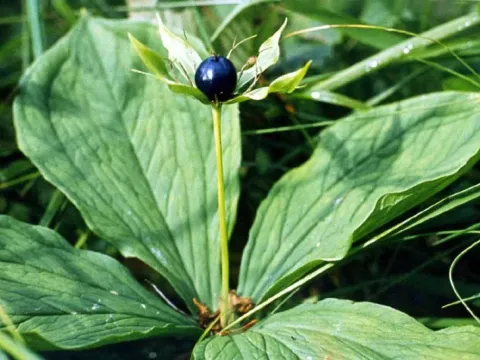
Herb Paris
Paris L.
Herb Paris (Paris L.) is not a conventional agricultural crop but rather a plant of botanical and medicinal interest. In nature, it propagates primarily through the growth of its creeping rhizomes, which allow the plant to colonize the forest floor gradually.
What the section contains
Herb Paris
Propagation by seed is possible but extremely challenging due to deep seed dormancy. Seeds require a multi-year stratification process, often involving cycles of cold and warmth, to break the physiological dormancy of the embryo.
In specialized nurseries, seeds are sown in autumn into damp, humic soil. Growers often wait two to three years for the first true leaves to emerge, necessitating significant patience and consistent environmental maintenance.
Vegetative division of established rhizomes is the preferred method for propagation. This is best done during the dormant phase in early spring or late autumn, ensuring each segment has healthy buds for future development.
When transplanting, one must preserve the original soil structure around the root system. Herb Paris is notoriously sensitive to root disturbance, which can lead to stunted growth or failure to establish in a new location.
As a member of the Melanthiaceae family, Herb Paris is a specialized forest plant that demands deep shade or partial shade. Direct sunlight is detrimental to its foliage and can cause the plant to wilt and perish within hours.
The ideal growing medium is nutrient-rich, moist, and well-drained soil typical of deciduous woodland environments. Soil should be slightly acidic to neutral to ensure the proper absorption of minerals required for its development.
Humidity is a critical factor for the success of this species. It thrives in stable, cool, and damp air conditions, making it unsuitable for open fields or areas with high wind exposure and low humidity levels.
Proper drainage is essential to prevent root rot, as the plant cannot tolerate waterlogged conditions. However, the soil must never dry out completely, requiring a delicate balance often achieved with organic leaf mulch.
The plant is frost-hardy and well-adapted to temperate climates. A consistent winter snow cover acts as insulation, protecting the rhizomes from the extreme temperatures of deep winter and allowing them to initiate growth in early spring.
Root rot, primarily caused by Fusarium and other fungal pathogens, is the most common threat when the soil moisture balance is disrupted. Overwatering, especially in heavy soils, provides the perfect environment for these infections to spread.
Slugs and snails are the primary pests affecting the foliage, particularly during damp weather. These mollusks can rapidly defoliate young plants, leaving the main stem susceptible to secondary infections through feeding wounds.
The plant's high content of saponins and other toxic glycosides serves as an effective deterrent against many herbivores, including rodents and deer. This natural defense reduces the need for chemical pest control in forest settings.
Mechanical damage to the stems or leaves can create entry points for bacteria. Therefore, all maintenance activities, such as weeding or site clearing, must be carried out with caution to avoid unnecessary wounding of the plants.
Disease prevention is best managed through cultural practices. Maintaining a diverse, healthy soil microbiome and providing adequate air circulation around the plants helps to keep the population robust and resistant to localized outbreaks.
The harvesting of Herb Paris requires extreme caution due to its high toxicity. Protective clothing, including gloves, must be worn to prevent dermal contact with plant sap, which can cause irritation or systemic effects.
Rhizomes are typically harvested in the autumn after the aerial parts have naturally withered. This timing ensures that the concentration of secondary metabolites is at its peak, as the plant has relocated energy reserves below ground.
Harvesting the aerial parts should be timed with the flowering stage, usually late spring to early summer. Using a sterile, sharp tool ensures a clean cut, which minimizes the damage to the rhizome system beneath the soil surface.
After collection, the material must be dried in a dark, well-ventilated area away from direct sunlight. Slow, consistent drying at low temperatures preserves the chemical integrity of the active compounds.
Once dried, the product should be stored in clearly labeled, airtight containers in a secure location. Given its poisonous nature, it is vital to keep all harvested materials away from children, pets, and unauthorized personnel.