
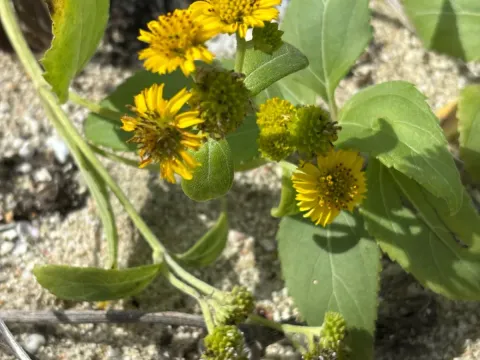
Melanthera biflora
Melanthera biflora
Melanthera biflora is a perennial herb belonging to the Asteraceae family. Originating from tropical coastal regions of Asia and the Pacific, this plant has adapted to survive in saline soils and sandy coastal environments, making it a unique agricultural candidate.
What the section contains
Melanthera biflora
The crop requires full sunlight exposure to maintain its rapid growth rates. It thrives in well-drained, nutrient-rich soils but shows remarkable resilience in poor, sandy substrates. Adequate moisture is preferred, though the plant exhibits significant drought tolerance once established.
Botanically, it is characterized by creeping stems that root at the nodes, allowing it to spread effectively as a groundcover. Its foliage is utilized in various traditional medicinal practices, and the plant serves as a food source in certain tropical regions due to its nutrient content.
For successful cultivation, the climate should remain warm, as the plant is not frost-tolerant. It performs best in temperatures ranging from 22 to 32 degrees Celsius, which encourages continuous vegetative production throughout the active growing season.
Economic utility extends beyond food and medicine to ecological restoration. Because of its dense growth habit, it is frequently used to stabilize soil on slopes and prevent erosion in coastal agricultural zones, proving its value as a multi-purpose crop.
Common pests affecting Melanthera biflora include aphids and mealybugs, which tend to congregate on the underside of leaves and succulent stems. Monitoring these populations is essential to ensure the vitality of the crop and prevent sap loss.
Fungal pathogens such as leaf spot and mildew are the primary disease concerns, especially in areas with poor airflow. Management strategies should focus on maintaining proper plant spacing and ensuring that the soil is not overly saturated for extended durations.