
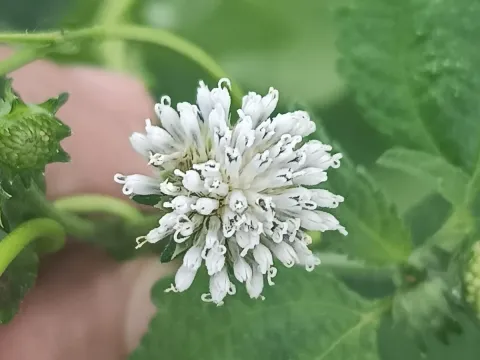
Melanthera confusa
Melanthera confusa
Melanthera confusa is a perennial herbaceous plant belonging to the Asteraceae family. In agricultural practice, it is recognized for its potential as a biomass source in tropical and subtropical regions where it thrives under high-intensity environmental conditions.
What the section contains
Melanthera confusa
The sowing season is dictated by the arrival of the rainy season. Ideal germination occurs when soil temperatures remain consistently between 22 and 25 degrees Celsius, providing the plant with the thermal energy needed for rapid early growth.
For large-scale cultivation, drilling the seeds in rows with 50 cm spacing is the recommended practice. This spacing helps prevent overcrowding while facilitating mechanical maintenance and nutrient distribution throughout the plant's development.
Pre-treatment of seeds, such as scarification or stratification, can significantly improve uniform germination rates. In climates with erratic weather, starting the plants in nursery trays before transplanting is a reliable strategy for success.
Agronomists should note the plant's aggressive growth habit. Effective field planning includes isolating the cultivation site to prevent the species from encroaching into surrounding areas through its rapid rhizomatous expansion.
Melanthera confusa is a heliophilic plant, meaning it requires full exposure to sunlight for optimal development. Reduced light intensity results in etiolated stems and a significant decline in total photosynthetic capacity and biomass yield.
The plant adapts well to various soil types but reaches its peak potential in well-drained loams. Excessive moisture retention is detrimental to the root system, making proper drainage design a fundamental prerequisite for site preparation.
Soil pH levels ranging from 5.5 to 7.0 are considered optimal for nutrient availability and plant growth. While the plant possesses moderate drought tolerance, regular irrigation is necessary during dry spells to maintain high-quality forage production.
Temperature is a limiting factor for this crop, as it is strictly suited for frost-free environments. Extreme cold or sub-zero temperatures will cause severe damage to the plant's vegetative structure, potentially killing the crop.
Strategic fertilization with nitrogen-heavy complexes is essential to stimulate lush leaf growth. Applying organic amendments prior to the main growth cycle helps maintain soil fertility and structure over multiple harvest seasons.
The primary economic value of Melanthera confusa lies in its prolific production of green biomass, which serves as a supplemental forage source. The plant is highly prized for its rapid regeneration speed following mechanical cutting.
Under optimal management, growers can expect between three and five harvests annually. The first cut should ideally be performed during the early budding stage to ensure the harvested material contains the highest density of protein and minerals.
Yield metrics are directly dependent on post-harvest management, including nitrogen application and irrigation cycles. Maintaining the plant's nutrient levels ensures that the regrowth cycle remains vigorous throughout the year.
The chemical profile of the biomass is generally suitable for livestock consumption. Integrating Melanthera with leguminous species can further enhance the overall nutritional balance of the silage or fresh fodder produced.
Land use efficiency is a major benefit of this crop, as the fast growth cycle allows for frequent harvests on a consistent basis, providing reliable production even on relatively small agricultural plots.
Common diseases affecting Melanthera confusa include fungal pathogens such as powdery mildew and various leaf spot disorders. These problems are most prevalent during periods of high humidity and stagnant air circulation.
Insect pests, including aphids and leaf-eating beetles, represent a significant risk to foliage health. Integrated pest management protocols, including regular field monitoring, are essential for maintaining crop integrity.
Prevention strategies should prioritize crop rotation and adequate plant spacing to facilitate airflow. Removing and destroying affected plant debris is a critical step in reducing the local pathogen population within the field.
Root rot remains a concern if soil moisture is not managed correctly. Ensuring excellent soil structure and avoiding waterlogging are the most effective preventive measures against soil-borne diseases.
Biological control methods are recommended to manage pest populations while preserving the safety of the forage. Utilizing local natural enemies of common pests provides a sustainable way to protect the crop yield.