
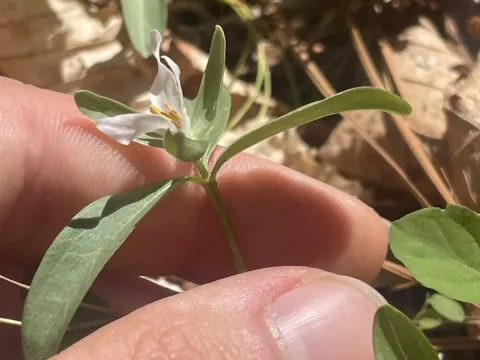
Least trillium
Trillium pusillum
The least trillium (Trillium pusillum) is a sophisticated herbaceous perennial that belongs to the Melanthiaceae family. Native to the southeastern United States, this species thrives in rich, moist woodland soils, typically found in floodplains and wetland areas where moisture levels remain consistent.
What the section contains
Least trillium
Botanically, the plant is distinguished by its short stature, usually growing between 10 and 30 centimeters in height. It features a whorl of three leaves at the top of the stem, crowned by a single, delicate flower consisting of three petals that transition from white to a soft pink as they mature.
When cultivating this species, success depends on replicating its native woodland habitat. The plant prefers deep to partial shade, as exposure to harsh, direct sunlight will quickly dehydrate the leaves and cause the plant to enter dormancy prematurely.
Soil quality is paramount; the planting site should be rich in organic matter, such as leaf mold or compost, to maintain a slightly acidic pH. Effective drainage is essential, as the rhizomes are susceptible to rot if subjected to waterlogged conditions during the dormant winter phase.
Regular maintenance includes applying a layer of organic mulch, which helps keep the root zone cool and moist. Due to the plant's slow growth rate, patience is required for establishment. It is best to avoid frequent disturbance, as the root system is sensitive and recovers slowly from mechanical damage.
The primary threats to the least trillium are fungal pathogens, specifically root and crown rots caused by excessive soil moisture and poor air circulation. Implementing a well-drained substrate and ensuring the planting area has adequate airflow can significantly mitigate these risks.
Pests such as slugs and snails are the most common herbivores to affect this plant, especially during the tender growth stages in early spring. Regular monitoring and, if necessary, the use of organic deterrents are recommended to protect the integrity of the foliage and ensure the plant's health.