
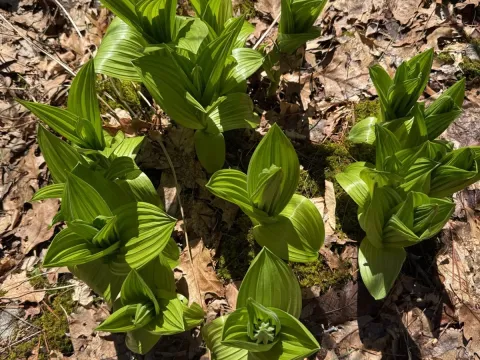
Green False Hellebore
Veratrum viride
Veratrum viride, commonly known as Green False Hellebore, is a herbaceous perennial belonging to the Melanthiaceae family. It is native to North America, where it thrives in moist meadows, swamps, and woodland edges.
What the section contains
Green False Hellebore
The plant is easily recognized by its tall, sturdy stem and large, pleated, elliptical leaves that can reach significant sizes. Its unique greenish-yellow flowers bloom in large, branched panicles during the early spring and summer months.
For successful cultivation, this species requires deep, fertile soil that remains consistently moist. It performs best in environments that mimic its native wetland habitats, provided there is adequate oxygenation in the root zone.
As a shade-loving plant, it should be situated in areas with partial or full shade. Protection from direct, intense sunlight is crucial, as the foliage is highly prone to scorching in hot summer climates.
In terms of human use, Veratrum viride is primarily valued for its alkaloids. Historically and in modern pharmaceutical research, extracts from its rhizomes have been studied for their potent cardiovascular and medicinal properties.
Veratrum viride is notoriously toxic, which naturally deters many herbivores. However, horticultural practitioners should remain vigilant against common pathogens that affect forest-dwelling perennials in cultivation.
Fungal leaf spot diseases represent the primary threat, especially when air circulation is poor or humidity levels remain high for extended periods. Thinning the plants and removing infected debris can help manage these issues.
While large insect pests are rare, small sucking insects like aphids can sometimes colonize the flower stalks. Monitoring during the early bloom phase is recommended to prevent localized infestations from spreading.
Root rot is the most serious threat, typically resulting from improper drainage or heavy, compacted soil. Once the rhizome system is compromised by rot, the entire plant usually fails to recover and should be removed.
Strict safety protocols must be followed during any cultivation or harvesting task. Contact with plant sap, inhalation of powdered dried roots, or ingestion of any part of the plant can be extremely hazardous to health.