
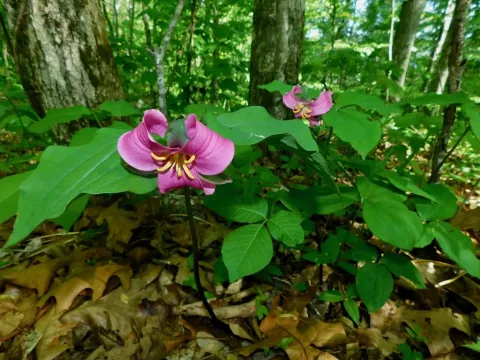
Catesby's Trillium
Trillium catesbaei
Catesby's Trillium (Trillium catesbaei) is a perennial herb belonging to the Melanthiaceae family. Native to the southeastern United States, this species is typically found in moist, deciduous forests and wooded ravines.
What the section contains
Catesby's Trillium
The plant thrives in acidic, well-draining soils that are rich in organic matter. Gardeners should mimic its natural forest floor habitat by incorporating leaf mold and decomposed pine needles to achieve the required soil structure and acidity level.
Light requirements are strict for this species, as it requires deep shade or dappled sunlight. Direct exposure to intense sun during the peak of summer will inevitably stress the plant, causing premature dormancy and potential crown damage.
Water management is crucial during the growing season. The soil should remain consistently moist but never waterlogged. Establishing a site with adequate natural drainage is more effective than attempting to manage irrigation in heavy, compacted soils.
When used in horticultural settings, Catesby's Trillium is ideal for woodland gardens or shaded rockeries. Its unique flower structure and adaptability to low-light environments make it a highly desirable specimen for native plant collections.
Slugs and snails are the primary pests of Catesby's Trillium, particularly during the early spring when the foliage is soft and tender. Implementing organic barriers or bait traps is standard practice for protection in home landscapes.
Root rot, driven by Phytophthora species or other water-borne pathogens, is a significant threat when soil moisture is poorly managed. High humidity combined with poor airflow can exacerbate these issues significantly during rainy seasons.
Fungal leaf spots can manifest under conditions of high humidity or insufficient ventilation. To minimize the risk, gardeners should ensure adequate spacing between plants and avoid overhead watering, which splashes spores onto the foliage.
Viral infections may occasionally occur, indicated by mosaic patterns or stunted, distorted leaves. Since there is no effective chemical cure for viruses, infected plants should be removed and destroyed to prevent spreading to healthy specimens.
Voles and other small mammals may occasionally graze on the rhizomes if the plant is not protected. Ensuring a healthy, vigorous plant through optimal cultural practices is the best line of defense against both pests and secondary diseases.