
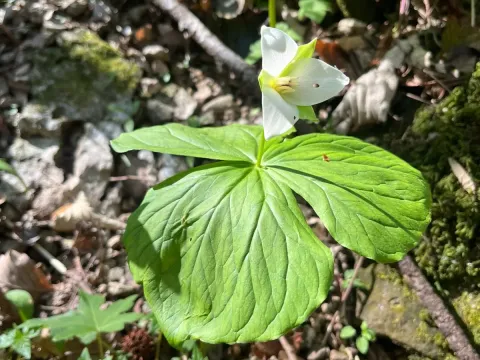
Bent trillium
Trillium flexipes
Trillium flexipes is a perennial herbaceous plant belonging to the Melanthiaceae family. Propagation is primarily achieved through seed sowing or careful division of rhizomes.
What the section contains
Bent trillium
Seeds require a lengthy cold stratification process, making autumn sowing the most effective method. Germination is slow, often taking up to two years to emerge.
Rhizome division should be performed in late summer when the foliage begins to senescence. Each section must retain at least one healthy growth bud to ensure survival.
Planting depth should be approximately 5–10 cm in well-draining, loose soil. Providing adequate space between plants helps prevent the spread of soil-borne pathogens.
Establishing a new patch requires patience, as the plants take several years to reach maturity and produce their characteristic nodding white flowers.
Native to North America, Trillium flexipes thrives in deciduous woodlands. It requires shaded environments with dappled sunlight rather than direct exposure.
The soil must be rich in organic matter, such as leaf mold or compost. Neutral to slightly acidic pH levels are ideal for long-term health and vigor.
Consistent soil moisture is essential for this species. Mulching with natural materials helps retain moisture and mimics the plant's natural woodland habitat.
The species is hardy in cool temperate climates but benefits from winter protection in areas with extreme temperature fluctuations or lack of snow cover.
In terms of хозяйственное (horticultural) use, it is a prized ornamental specimen for woodland gardens, shade borders, and naturalistic landscape designs.
Slugs and snails are the most significant pests for Trillium flexipes. They often consume emerging shoots and foliage, causing substantial aesthetic damage.
Root rot is a common issue when plants are situated in heavy or poorly drained soils. Improving drainage is critical for successful cultivation.
Invasive weeds can easily outcompete the trillium, stealing essential nutrients and water. Regular maintenance and hand-weeding are recommended for the site.
Fungal infections can occur during periods of prolonged humidity or stagnation. Proper air circulation around the plants helps mitigate these risks.
While generally hardy, plants subjected to environmental stress are more susceptible to leaf spot diseases, which necessitate removal of damaged tissue.